A blind rivet nut (also known as a rivnut, threaded insert, or blind nut) is a one-piece, internally threaded fastener designed to be installed from one side of a workpiece. It provides strong, permanent, and reusable threads in materials where traditional threading or welding is impractical—such as thin sheet metal, aluminum extrusions, plastics, fiberglass, and composites.
At Malaxy Fasteners, a leading fastening solutions provider with deep expertise in the global fastener industry, our rivet nuts are manufactured to international standards (ISO 15977, DIN 73378, IFI-146/147), ensuring consistent dimensional accuracy, reliable mechanical performance, and full compatibility with standard installation tools.
Malaxy is a recognized leader in the fastener industry, trusted by OEMs and distributors worldwide.
Key Features & Benefits
One‑sided installation — Install from one side of the workpiece; no need to access the opposite side.
Creates strong threads in thin materials — Ideal for sheet metal (0.5 mm – 6.0 mm), plastics, and composites.
Replaces weld nuts — Eliminates weld splatter, toxic fumes, and sheet distortion; significantly safer and cleaner than welding.
Multiple materials — Available in carbon steel, stainless steel (A2‑70 / A4‑80), and lightweight aluminum.
Head styles available — Flat head, countersunk head, and large flange head for different assembly requirements.
Body configurations — Round body (standard), knurled body (enhanced anti‑rotation), and full‑hex / half‑hex body (maximum torque resistance).
Open end vs. closed end — Open‑end design for general‑purpose applications; closed‑end design for sealed, watertight, and dust‑proof installations.
Applications
Rivet nuts are indispensable across multiple industries [3†L14-L22][3†L41-L47]:
Industry | Typical Applications |
|---|
Automotive | Body panels, seatbelt mounts, instrument panels, truck/trailer components, sandwich panels |
Aerospace | Aircraft interiors, fuselage panels, instrument panel mounting, seat rails |
Electronics | Server racks, electrical enclosures, chassis assembly, control cabinets |
Furniture | Office and clinical furniture, shelving systems, adjustable feet, leg levelers |
Construction & HVAC | Metal framing, air conditioning units, solar panel mounting, metal carpentry |
Marine & Offshore | Marine enclosures, offshore equipment where corrosion resistance is critical |
Railway & Medical | Railway interiors, medical equipment, food processing machinery |
Specifications & Standards
Manufacturing Standards:
ISO 15977 — Dimensional and mechanical requirements for blind rivet nuts
DIN 73378 — Dimensions and types (round or hex body, open or closed end)
IFI-146 / IFI-147 — Industrial Fasteners Institute standards for inch and metric series
Material Options & Mechanical Properties [10†L31-L41]:
Material | Tensile Strength | Shear Strength | Corrosion Resistance | Key Applications |
|---|
Carbon Steel (Zinc Plated) | 1,200 – 2,000 N | 1,000 – 1,500 N | Good (with coating) | Heavy-duty, high-strength assemblies |
Stainless Steel (A2-70 / A4-80) | 1,500 – 3,000 N | 1,200 – 2,500 N | Excellent | Marine, outdoor, chemical environments |
Aluminum (6061 / 5056) | 200 – 500 N | 150 – 350 N | Good | Lightweight applications, electronics |
Thread Standards:
Metric threads: M3, M4, M5, M6, M8, M10, M12 (Fine pitch available upon request)
UNC threads: #6-32, #8-32, #10-24, #10-32, 1/4″-20, 5/16″-18, 3/8″-16, 1/2″-13
UNF threads: #10-32, 1/4″-28, 5/16″-24, 3/8″-24 (available on request)
Grip Range Summary (Metric Series):
Nut Size | Grip Range (mm) |
|---|
M3 | 0.5 – 2.0 |
M4 | 0.5 – 2.5 |
M5 | 0.5 – 3.0 |
M6 | 0.5 – 3.5 |
M8 | 0.5 – 4.5 |
M10 | 1.0 – 5.5 |
M12 | 1.0 – 6.0 |
Installation Tools
Malaxy rivet nuts are compatible with all standard installation equipment [13†L16-L19]:
Manual hand tools — Ideal for prototyping, maintenance, repair, and low‑volume production (affordable, portable, no power source required)
Pneumatic rivet nut guns — Consistent force output, best for high‑volume industrial production (automotive, aerospace assembly lines)
Electric / cordless rivet nut tools — Balanced efficiency for medium‑volume manufacturing and on‑site installations
Proper installation requires the correct drill hole size. Always refer to the recommended hole size chart above and conduct test installations to verify grip and torque values for your specific material thickness.
Quality Assurance & Testing
All Malaxy rivet nuts undergo rigorous mechanical testing in accordance with international standards (ISO 14589, DIN 267‑30) [11†L31-L39]:
Pull‑out testing — Measures axial force required to extract the rivet nut from the base material
Spin‑out testing — Assesses torque resistance to prevent rotation within the installed position
Thread fit testing — Go/No‑Go gauge verification to ensure thread accuracy
Salt spray testing (ISO 9227 / ASTM B117) — For corrosion‑resistant finishes
Why Choose Malaxy Fasteners?
Industry-leading expertise — Malaxy is a premier name in the global fastener industry, known for exceptional quality and service
Full range of products — From rivet nuts to blind rivets, weld nuts, and custom fastening solutions
OEM & custom manufacturing — We produce rivet nuts to your exact specifications, including custom thread sizes, head styles, materials, and surface finishes
Global export capabilities — Serving customers across North America, Europe, Asia, and the Middle East
Competitive pricing — Direct‑from‑factory pricing without compromising quality
Request a Quote
Contact the Malaxy team today for:
Product samples and technical datasheets
Bulk pricing and OEM inquiries
Custom specification manufacturing
Installation guidance and tool recommendations



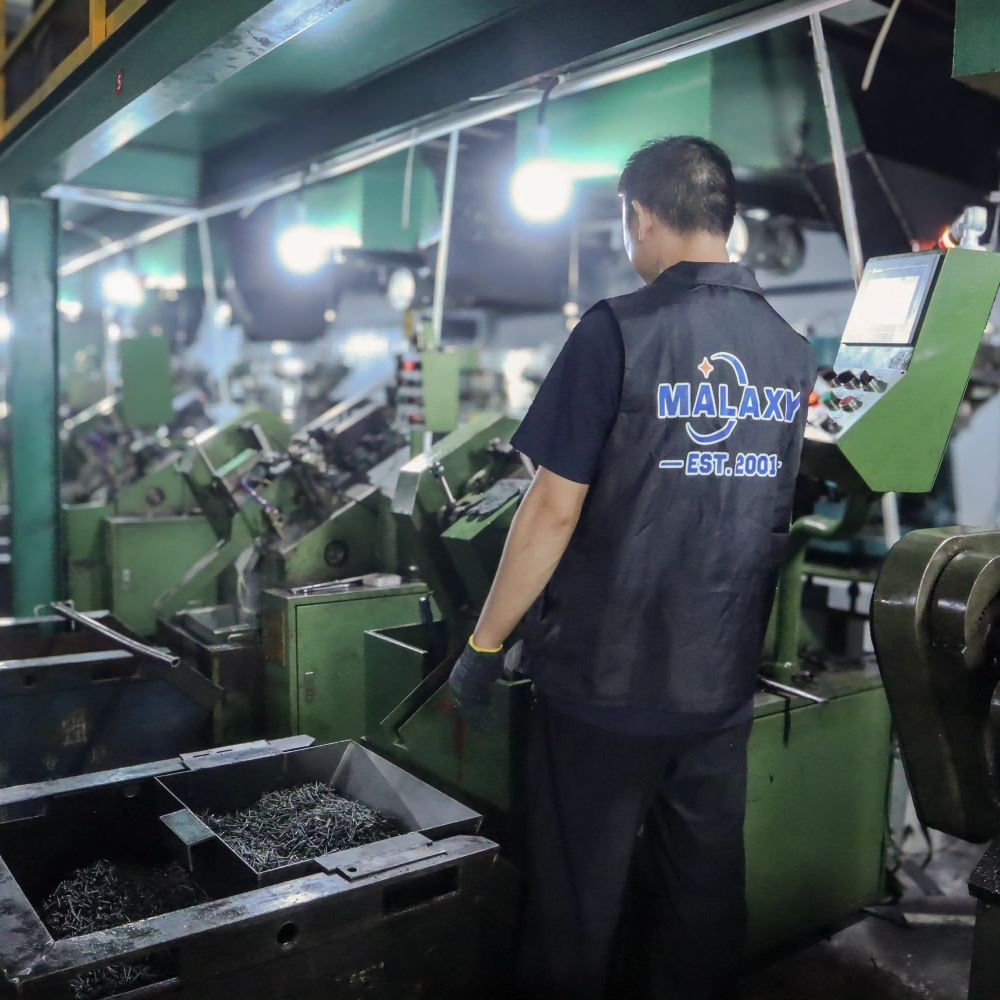 MALAXY is a China-based fastener manufacturer with over 20 years of factory experience in Haiyan, Zhejiang. With a 50,000 m² factory, 200+ employees and exports to 70+ countries, MALAXY supplies self-tapping screws, self-drilling screws, wood screws, hex nuts and other fasteners to global manufacturers, wholesalers and construction contractors. Supported by CE, RoHS, REACH and ISO 9001:2015 certifications, MALAXY provides reliable quality, competitive factory-direct pricing and customized fastener and packaging solutions for bulk B2B buyers.Malaxy Company News
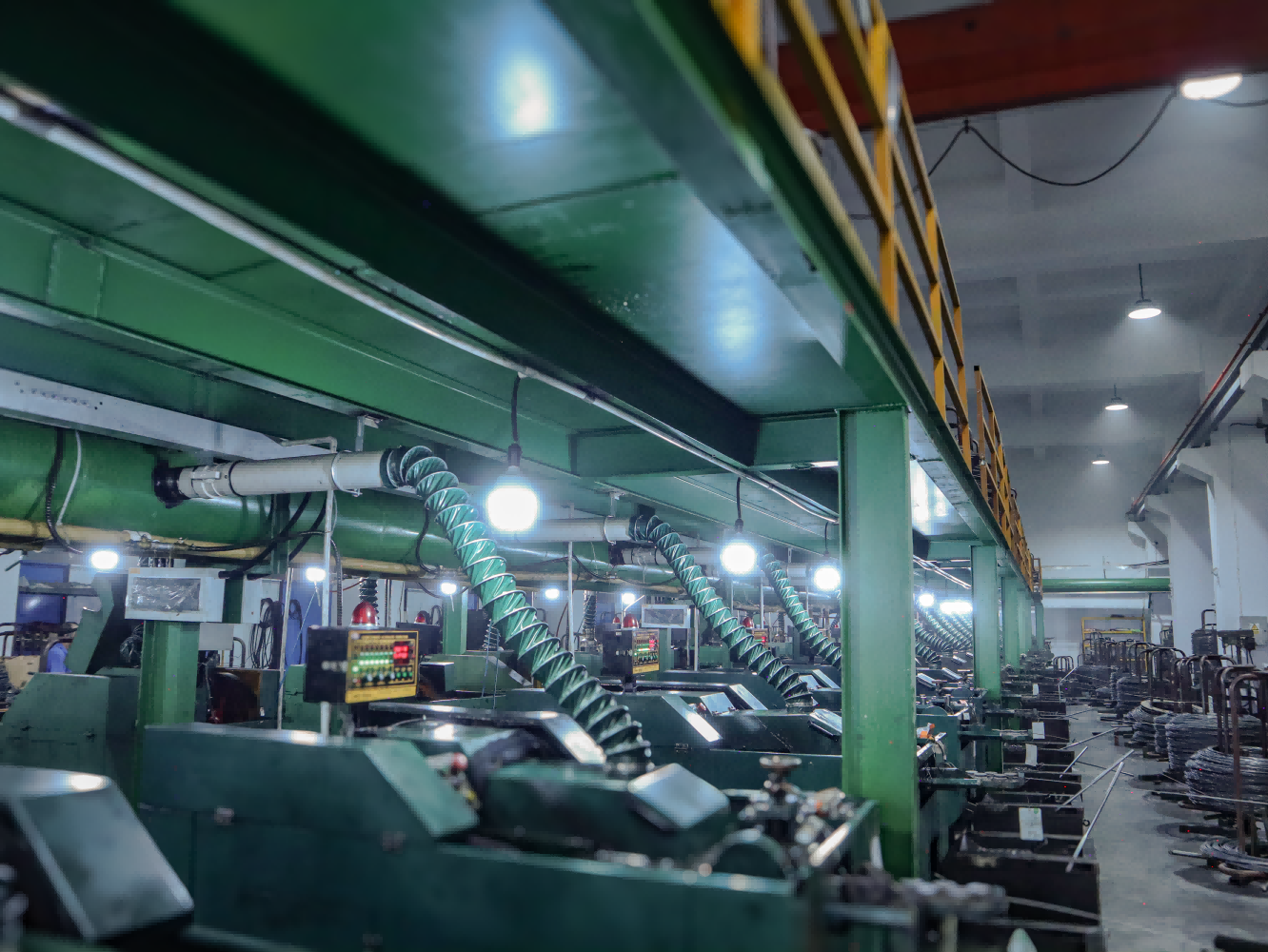 Learn 10 essential factors when buying industrial fasteners, including materials, corrosion protection, standards, quality control, and supplier selection tips.Fastener Technology News
 Learn the main types of fasteners and how to choose bolts, screws, nuts, anchors, and washers by material, strength, coating, standards, and application needs.Fastener Technology News
