Overview
The Spring Washer from Shanghai Malaxy Foreign Trade Co., Ltd. is a precision-engineered locking component designed to prevent fastener loosening in bolted connections subjected to vibration, dynamic loads, or thermal cycling. As a leading fastener manufacturer in China, Malaxy offers a comprehensive range of spring washers—including split lock washers, helical spring washers, conical (Belleville) washers, and wave washers—to meet diverse industrial requirements. All products are manufactured in strict compliance with international standards (DIN, GB, ANSI, JIS, BS) and are fully customizable for OEM applications.
Key Features
Anti-Vibration Locking – Spring washer compresses under load, generating continuous elastic tension that prevents nuts and bolts from loosening due to vibration, shock, or dynamic forces. Compared to a flat washer, a spring washer provides extra elasticity to various metal joints.
Elastic Deformation & Preload Maintenance – When compressed, the washer stores energy and exerts a restoring force, maintaining clamping force on the fastener and compensating for minor movements in assemblies. This ensures long‑term joint stability and prevents self‑loosening under continuous work forces.
Shock Absorption – The spring design absorbs vibrations and shocks, protecting the structure from their negative effects during heavy‑duty operation. Split lock washers are ideal for firm gripping of nuts and bolts and stand robust against vibrations.
Enhanced Friction & Biting Action – The washer‘s edges or teeth bite into the mating surfaces, increasing resistance to rotational loosening. Square‑section spring washers provide much better resistance as compared to plain washers.
Corrosion Resistance Options – Available in stainless steel (SS304, SS316) for harsh outdoor, marine, and chemical environments. Surface treatments include zinc plating (clear/yellow/black), black oxide, phosphating, Dacromet, and Geomet coatings.
Wide Temperature Tolerance – Spring steel washers perform reliably across a broad temperature range; stainless steel variants maintain corrosion resistance in extreme environments.
Customizable – Available in any nominal diameter (M1.6–M56+), material grade (65Mn/70#/SS304/SS316/phosphor bronze/titanium), surface finish, and spring rate.
Material Specifications
Property | Spring Steel Grade | Stainless Steel Grade |
|---|
Material | 65Mn, 70# (GB), C60S (DIN) | AISI 304, AISI 316 (SS304/SS316) |
Tensile Strength | ≥980 MPa | ≥520 MPa (304) / ≥515 MPa (316) |
Hardness (HRC) | 42–50 | 25–35 |
Temperature Range | -20°C to +250°C | -40°C to +800°C |
Corrosion Resistance | Moderate (requires coating) | Excellent (304: general; 316: marine) |
Magnetic Property | Magnetic | Slightly magnetic (304) / non-magnetic (316) |
Surface Treatment Options
Finish | Description | Application Environment |
|---|
Zinc Plated (Clear/Yellow/Black) | Economical corrosion protection; bright finish | Indoor, general industrial |
Black Oxide | Matte black finish; minimal corrosion protection | Aesthetic applications, light duty |
Phosphating | Improved wear resistance and lubricity | Automotive, mechanical assemblies |
Dacromet / Geomet | High‑temperature durable coating; excellent salt spray resistance | Heavy‑duty, outdoor, marine |
Hot‑Dip Galvanized (HDG) | Thick zinc coating; superior corrosion protection | Construction, outdoor infrastructure |
Plain (Uncoated) | Oiled finish only | Temporary use, further processing |
Types of Spring Washers
Type | Description | Typical Applications |
|---|
Split Lock Washer (Helical Spring Washer) | Helical cut with offset ends; creates spring tension when compressed. Most common type. | General machinery, automotive fasteners, industrial equipment |
Conical Spring Washer (Belleville Washer) | Cone‑shaped disc providing high load capacity in minimal space; can be stacked for variable spring rates. | Heavy‑duty applications: valves, flanges, power plants, aerospace |
Wave Washer | Wavy‑ring design offering uniform pressure distribution with light spring force. | Ball bearings, light machinery, delicate assemblies, electronics |
Curved Spring Washer | Slightly bowed design; moderate load and deflection capacity. | General mechanical assemblies, automotive trim |
Toothed Lock Washer | Internal or external serrations that bite into mating surfaces. | High‑vibration environments, joining wires, electrical grounding |
Applications
Automotive Industry – Engine mounts, suspension systems, transmission assemblies, commercial vehicles (tractors, heavy/light commercial vehicles), auto engines and transmissions.
Construction & Infrastructure – Steel frameworks, bridge bolts, heavy‑duty structural connections, solar panel mounting, wind turbine assemblies.
Industrial Machinery – Pumps, gearboxes, conveyor systems, agricultural equipment, machine tools, vibration‑prone mechanical assemblies.
Aerospace – Critical joints in aircraft structures, where vibration resistance and weight optimization are paramount.
Electronics & Electrical – Securing circuit board components, electrical enclosures, junction boxes, rotating shaft assemblies.
Plumbing & Valve – Flange connections, valve stem assemblies, piping systems requiring preload maintenance.
Quality Standards
Malaxy spring washers are manufactured in compliance with the following international standards:
Standard | Description |
|---|
DIN 127A / 127B | German standard for split lock washers (shape A/B) |
DIN 6796 | Conical spring washer (disc spring) for bolted connections |
DIN 137A / 137B | Curved and wave spring washers |
DIN 128 | Spring lock washers, heavy type |
GB 93 | Chinese national standard for spring washers |
ANSI/ASME B18.21.1 | American standard for lock washers (inch series) |
JIS B 1251 | Japanese industrial standard |
BS 4464 | British standard for split coil washers |
Why Choose Shanghai Malaxy?
Industry Leader – Malaxy is a recognized name in the global fastener industry, delivering reliable fastening solutions to clients worldwide.
Complete Product Portfolio – Comprehensive range including spring washers, flat washers, EPDM washers, bolts, nuts, screws, and custom fasteners.
Manufacturing Excellence – State‑of‑the‑art production facilities with monthly capacity exceeding 10 million pieces. Strict quality control from raw material inspection to finished product testing.
OEM/ODM Capability – Custom manufacturing available to customer drawings or samples. Non‑standard sizes, special materials, and unique finishes all supported.
Global Certifications – ISO 9001 certified. Products available with RoHS compliance upon request.
Competitive Pricing & Fast Delivery – Factory‑direct pricing with no middleman. Efficient logistics to Europe, North America, Australia, Southeast Asia, and the Middle East.
Technical Support – Professional engineering team to assist with material selection, design optimization, and application‑specific solutions.
Order Information
Min. Order Quantity – 5,000 pcs (lower for sample orders)
Sample Lead Time – 3–7 days
Mass Production Lead Time – 15–30 days based on quantity
Shipping Terms – FOB Shanghai, CIF, EXW, CFR
Payment Terms – T/T, L/C, Western Union
HS Code – 7318.21 (Spring washers and other lock washers, of iron or steel)
Contact Malaxy today for a quote or to request free samples!



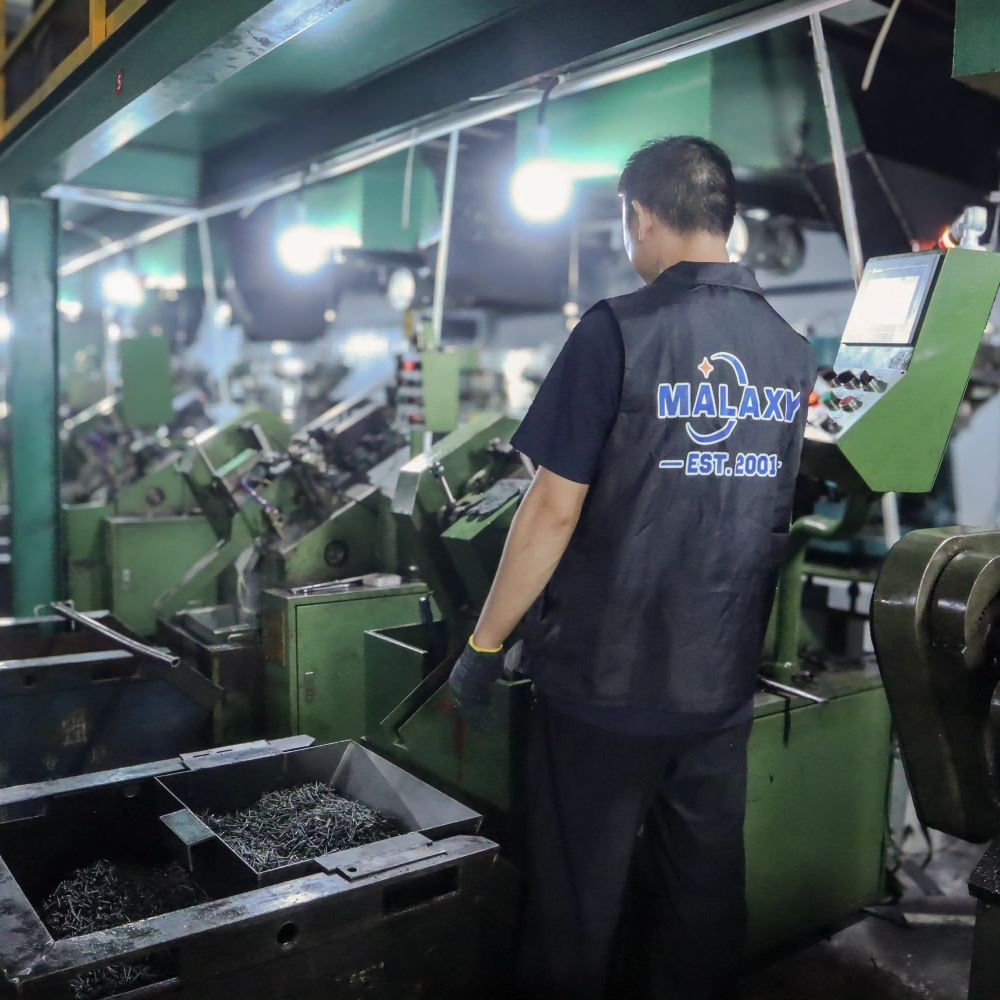 MALAXY is a China-based fastener manufacturer with over 20 years of factory experience in Haiyan, Zhejiang. With a 50,000 m² factory, 200+ employees and exports to 70+ countries, MALAXY supplies self-tapping screws, self-drilling screws, wood screws, hex nuts and other fasteners to global manufacturers, wholesalers and construction contractors. Supported by CE, RoHS, REACH and ISO 9001:2015 certifications, MALAXY provides reliable quality, competitive factory-direct pricing and customized fastener and packaging solutions for bulk B2B buyers.Malaxy Company News
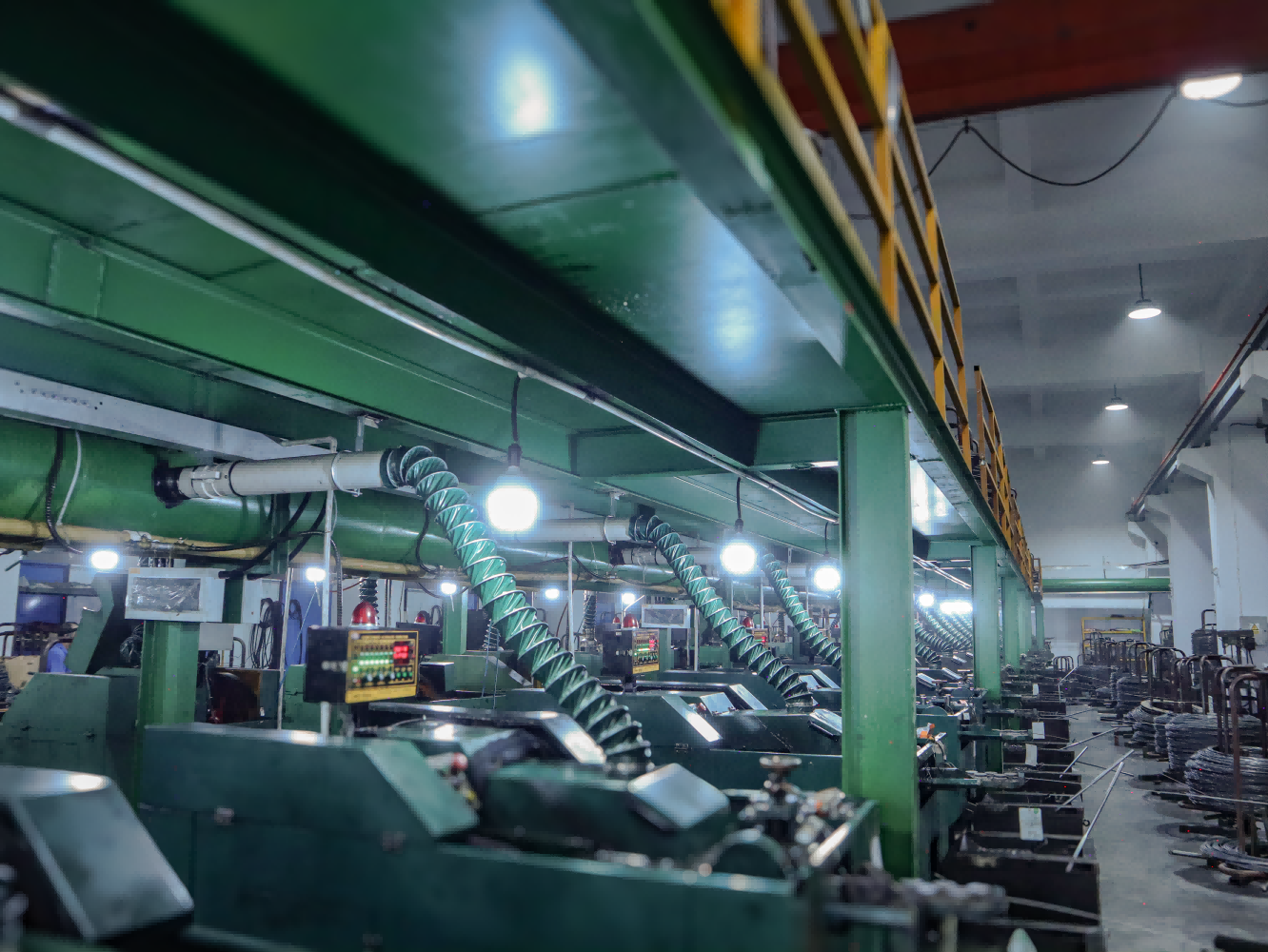 Learn 10 essential factors when buying industrial fasteners, including materials, corrosion protection, standards, quality control, and supplier selection tips.Fastener Technology News
 Learn the main types of fasteners and how to choose bolts, screws, nuts, anchors, and washers by material, strength, coating, standards, and application needs.Fastener Technology News
