Malaxy chipboard screws are specifically designed for joining wood-based materials. Made from case‑hardened C1022 low-carbon steel, they combine core toughness with surface hardness to prevent breakage during high‑torque driving. The double (twin) thread geometry provides twice the engagement surface compared to single-thread screws, resulting in faster installation and a significantly stronger hold in particle board and MDF.
Available in bright zinc plated (white/blue) or black zinc finishes, offering reliable corrosion protection for indoor furniture and interior woodwork.
Key Features & Advantages
Double Thread (Twin Thread) Design – Two parallel threads increase thread engagement area, allowing the screw to be driven faster (up to 30% faster than single thread) while achieving higher pull‑out and strip‑out torque – especially critical for low-density chipboard and MDF.
Sharp Gimlet Point (Self Tapping) – Needle‑sharp point penetrates wood fibres instantly without pre‑drilling in most materials, reducing assembly time and labour cost.
Deep Countersunk Head with Under‑Head Ribs – 90° flat head sinks flush into wood surface for a clean, invisible finish. The ribs on the underside act as a counterbore, preventing wood tear‑out and eliminating the need for a separate countersinking step.
Case‑Hardened C1022 Steel – Surface hardness HV 550–700, core hardness HV 300–420. Provides excellent driving torque capacity while maintaining flexibility to avoid brittle failure.
Zinc Plating (Yellow/White/Black) – Meets ASTM B633 (SC1) for moderate corrosion resistance in dry interior environments; suitable for furniture, cabinets, and wood frames.
Applications
Furniture manufacturing (chipboard wardrobes, desks, shelves)
Kitchen cabinet assembly (MDF doors and frames)
Flooring underlayment fixing (plywood subfloors)
Wooden pallet and crate assembly
General woodworking and DIY projects
Fastening hinges, brackets, and fittings to particle board
Technical Specifications (Reference)
Why Choose Malaxy?
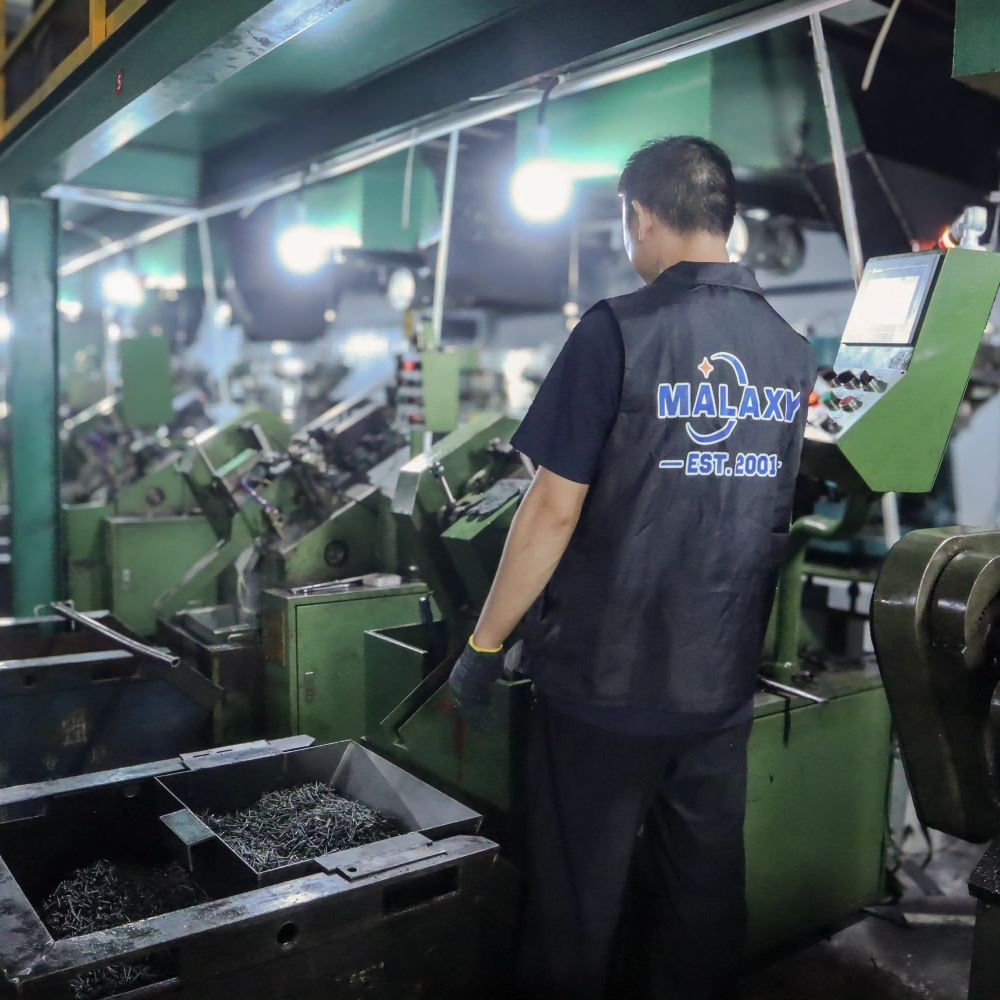
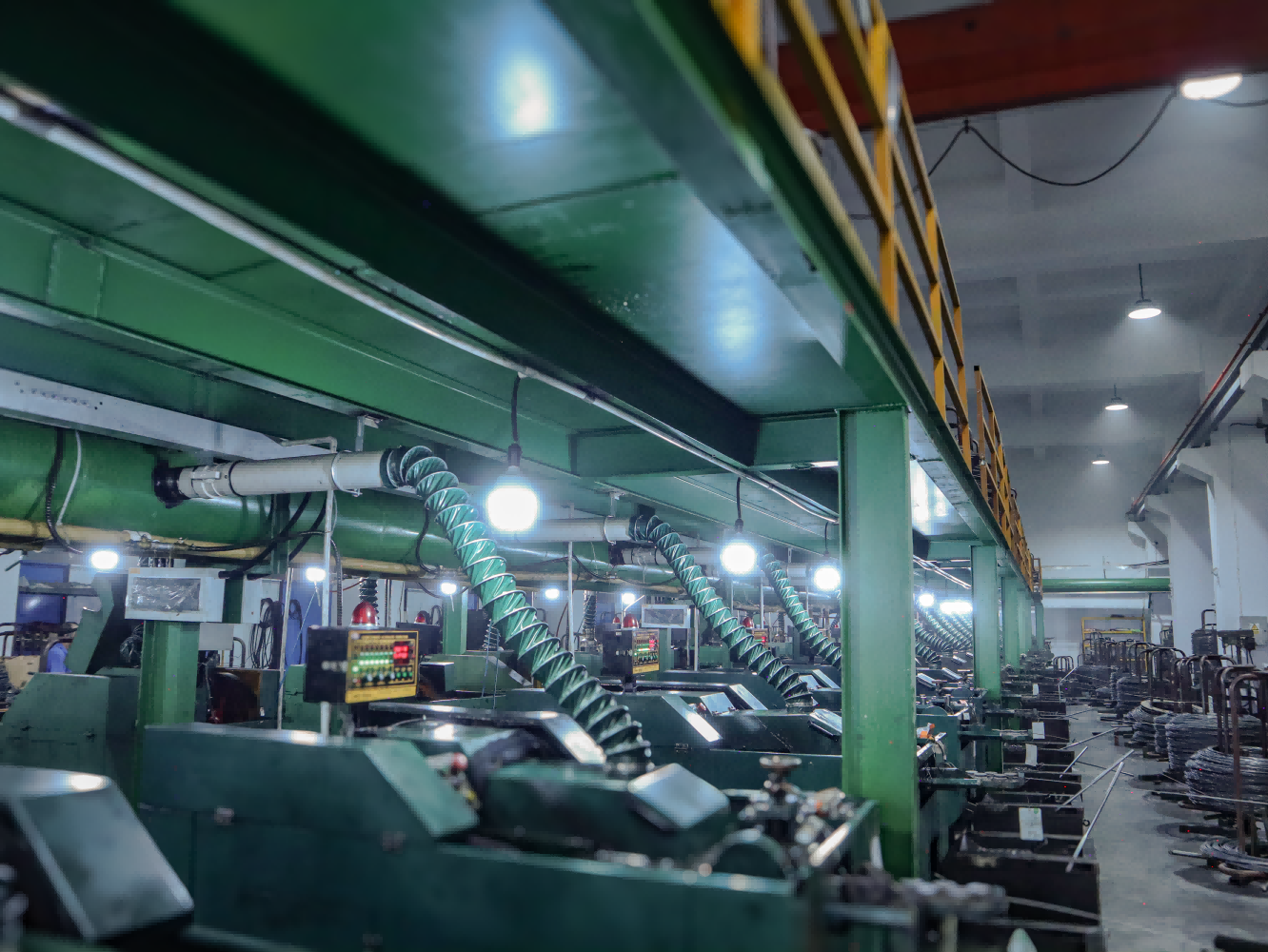
Factory-direct strength – Malaxy is a well‑established fastener manufacturer with full in‑house production, ensuring consistent quality and competitive pricing for wholesale buyers.
Strict quality control – 100% visual and thread gauge inspection; torque and hardness tested per batch.
Global export experience – Serving clients in North America, Europe, Southeast Asia, Middle East, and South America.
OEM / ODM capabilities – Custom sizes, head markings, special coatings (geomet, zinc‑aluminum), and private label packaging available.
Fast lead time – 15–30 days for standard orders; sample service supported.
Packaging & Logistics
Standard packing: Small bulk boxes (150–500 pcs/box) → master export carton → reinforced pallet
Custom packing: Blister packs, retail display boxes, or customer‑branded cartons
Shipment: By sea, air, or express courier (DHL, FedEx for samples)
Delivery: 7–15 days for sample orders; 20–30 days for full container orders
Order Samples or Get a Wholesale Quote
Malaxy is ready to support your next wood fastening project. Request a free sample (only shipping fee applied) or contact our sales team for a volume discount.