


How to Choose Fasteners: Materials, Screws, Bolts & Corrosion Resistance
Introduction
Choosing the right fastener is critical for construction, machinery, HVAC, automotive and industrial applications. The wrong material or surface treatment can cause corrosion, thread damage, loosening and premature failure.
For buyers and engineers, selecting corrosion resistant screws, bolts and other industrial fasteners requires more than checking size and price. Material, strength, coating, environment and application should all be considered.
What Is a Corrosion Resistant Screw?
A corrosion resistant screw is made from a corrosion-resistant material, such as stainless steel, or protected by a surface coating designed to reduce corrosion.
Common options include:
Stainless steel screws
Zinc plated screws
Hot-dip galvanized fasteners
Corrosion-resistant coated fasteners
The right choice depends on moisture, salt exposure, chemicals, temperature, mechanical load and expected service life.
Stainless Steel vs. Zinc Plated Screws
Two common choices are stainless steel and zinc plated carbon steel.
Fastener | Main Advantage | Typical Application |
|---|---|---|
Stainless Steel 304 | Good corrosion resistance | Construction, equipment, general outdoor use |
Stainless Steel 316 | Higher chloride resistance | Coastal, marine and demanding outdoor environments |
Zinc Plated Steel | Cost-effective protection | Indoor and moderate environments |
Hot-Dip Galvanized Steel | Enhanced corrosion protection | Outdoor construction and structural applications |
Stainless steel is not automatically the best choice for every application. Engineers should consider both corrosion resistance and mechanical requirements.
ISO 3506-1 covers mechanical and physical properties of corrosion-resistant stainless steel bolts, screws and studs, while ISO 3506-2 covers stainless steel nuts.
How Does Fastener Corrosion Protection Work?
Fastener corrosion protection mainly comes from:
Material Selection
Stainless steel provides inherent corrosion resistance through its alloy composition and passive surface layer.
Surface Coating
Zinc plating and galvanizing create a protective layer over carbon steel.
Correct Application
Even a high-quality coating can perform poorly if it is damaged during installation or used in an environment beyond its intended protection level.
Galvanic corrosion should also be considered when different metals are connected, especially in wet or salty environments.
How to Choose the Right Industrial Fasteners
A practical selection process includes five steps:
1. Identify the application
Determine whether the fastener is used for construction, HVAC, machinery, roofing, automotive or outdoor equipment.
2. Check the load requirement
Consider tensile load, shear load, vibration, fatigue and installation torque.
3. Select the material
Common choices include carbon steel, alloy steel, stainless steel 304 and stainless steel 316.
4. Select surface treatment
For carbon steel fasteners, options may include zinc plating, hot-dip galvanizing, black oxide and phosphate coatings.
5. Verify standards
Depending on the market and application, check ISO, DIN, ASTM, ANSI, BS or JIS requirements.
Common Fastener Selection Mistakes
Avoid these common mistakes:
Choosing fasteners only by price
Using standard zinc plated screws in highly corrosive environments
Assuming all stainless steel grades have the same performance
Ignoring galvanic corrosion
Selecting strength without considering the application
Ignoring coating damage during installation
The best fastener is the one that provides the required strength, corrosion resistance, service life and cost balance.
MALAXY Manufacturer Insights
MALAXY is a fastener manufacturer based in Haiyan, Zhejiang, China, with more than 20 years of manufacturing and export experience.
The company supplies:
Screws
Bolts
Nuts
Anchors
Washers
Self drilling screws
Self tapping screws
Other industrial fasteners
For B2B buyers, fastener quality depends on more than the finished product. Important manufacturing controls include raw material verification, dimensional inspection, mechanical testing, thread inspection and surface treatment control.
When requesting a quotation, buyers should provide the product type, size, material, grade, standard, surface treatment, application and packaging requirements.
FAQ
Q: What are corrosion resistant screws?
A: Corrosion resistant screws are made from corrosion-resistant materials or protected with coatings designed to reduce corrosion.
Q: Are stainless steel screws better than zinc plated screws?
A: Stainless steel generally provides better inherent corrosion resistance, while zinc plated screws are a cost-effective choice for many indoor and moderate environments.
Q: Are 316 stainless steel screws better than 304?
A: 316 generally provides better resistance in chloride-rich environments, while 304 is suitable for many general applications.
Q: What are the best fasteners for outdoor applications?
A: The appropriate choice depends on moisture, salt exposure, mechanical load and service life. Stainless steel and properly coated carbon steel are common options.
Q: How do I choose the right industrial fastener?
A: Consider application, load, material, strength grade, coating, corrosion environment and applicable standards before purchasing.
Conclusion
Choosing the right fastener requires a balance between material, strength, corrosion resistance, coating, application and cost.
Stainless steel screws are suitable for many demanding environments, while zinc plated and galvanized fasteners can provide economical corrosion protection for less aggressive applications.
For industrial buyers, working with an experienced fastener manufacturer can help ensure the correct specification, material and surface treatment are selected for the intended application.
MALAXY supplies screws, bolts, nuts, anchors, washers and other industrial fasteners for global B2B customers.
Other Articles
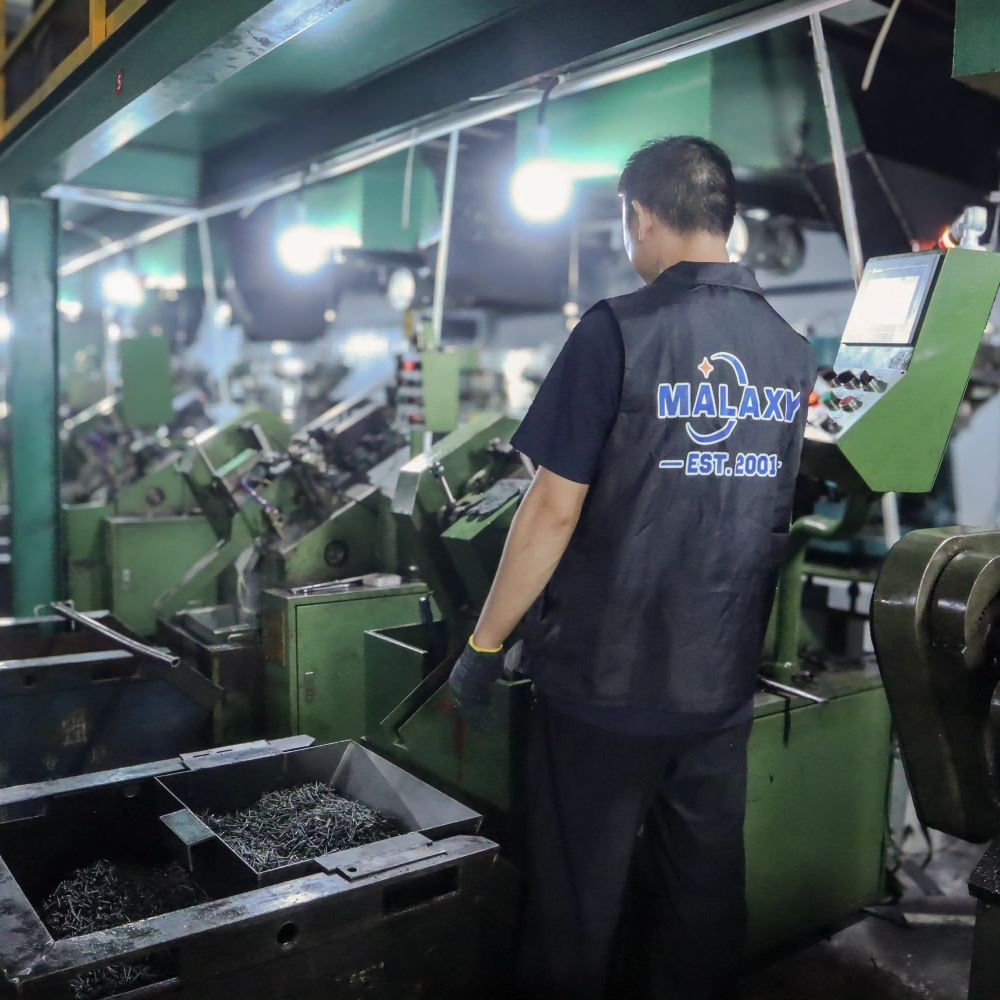
Inside MALAXY’s Fastener Factory in Haiyan, Zhejiang
10 Important Factors to Consider When Buying Industrial Fasteners: A Complete Guide for Global Buyers
