Tel: +86 18018587352 | WhatsApp: +86 18018587352 | Email: ok@malaxygroup.com

bj1

News

Home News RUSPERT vs. DACROMET – Choosing the Ultimate Armor for Fasteners
In the modern industrial and construction sectors, anti-corrosion technology directly dictates the safety and longevity of any project. Recently, the debate over choosing RUSPERT versus the traditional DACROMET coating has gained significant traction. While both are heavyweights in high-performance protection, they differ fundamentally in engineering logic and application.
Core Analysis: What is RUSPERT Coating?
RUSPERT is not a single material but a high-grade metal surface treatment technology consisting of a three-layer systemic shield:
  1. The Inner Layer: A metallic zinc layer (providing sacrificial galvanic protection).

  2. The Middle Layer: A high-quality chemical conversion film (enhancing adhesion).

  3. The Outer Layer: A ceramic-like baked surface coating (providing a powerful physical barrier).

This "triple-threat" structure makes it exceptionally resistant to chemical corrosion, such as acid rain and industrial pollutants.
Deep Comparison: RUSPERT vs. DACROMET
FeatureRUSPERTDACROMET
Coating LogicComposite (Zinc + Conversion + Ceramic)Zinc-Chrome (Zinc/Alum flakes + Chromate)
Color/AestheticsVersatile. Customizable in Red, Blue, Green, etc.Limited. Usually matte silver or grey.
Heat ResistanceModerate. Best for standard outdoor temps.Extreme. Stable even at 250°C - 300°C.
Eco-FriendlinessHigh. Chrome-free and compliant with green standards.Variable. Traditional versions contain toxic Hexavalent Chromium.
Key AdvantageSuperior resistance to Acid Rain & Humidity.Zero Hydrogen Embrittlement risk for high-tensile steel.

Spotlighting a Global Leader: Malaxy Fastener Co., Ltd.
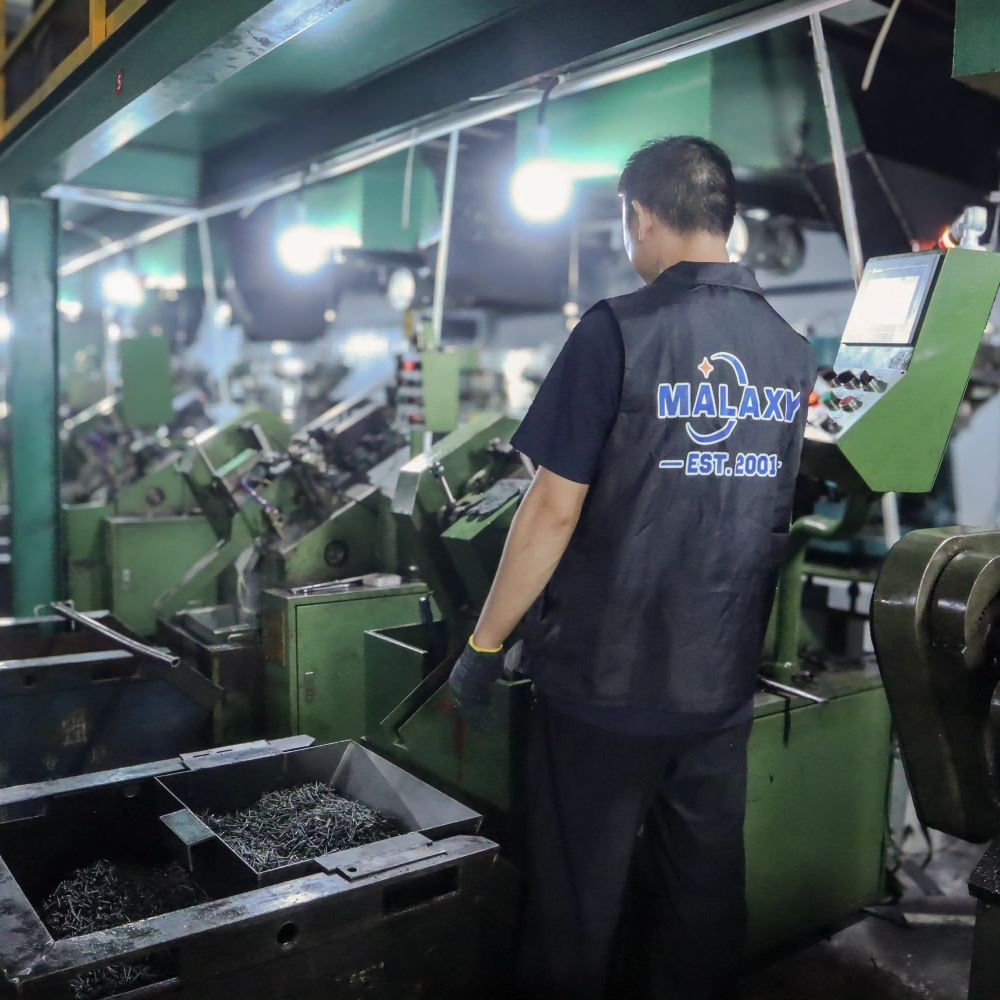
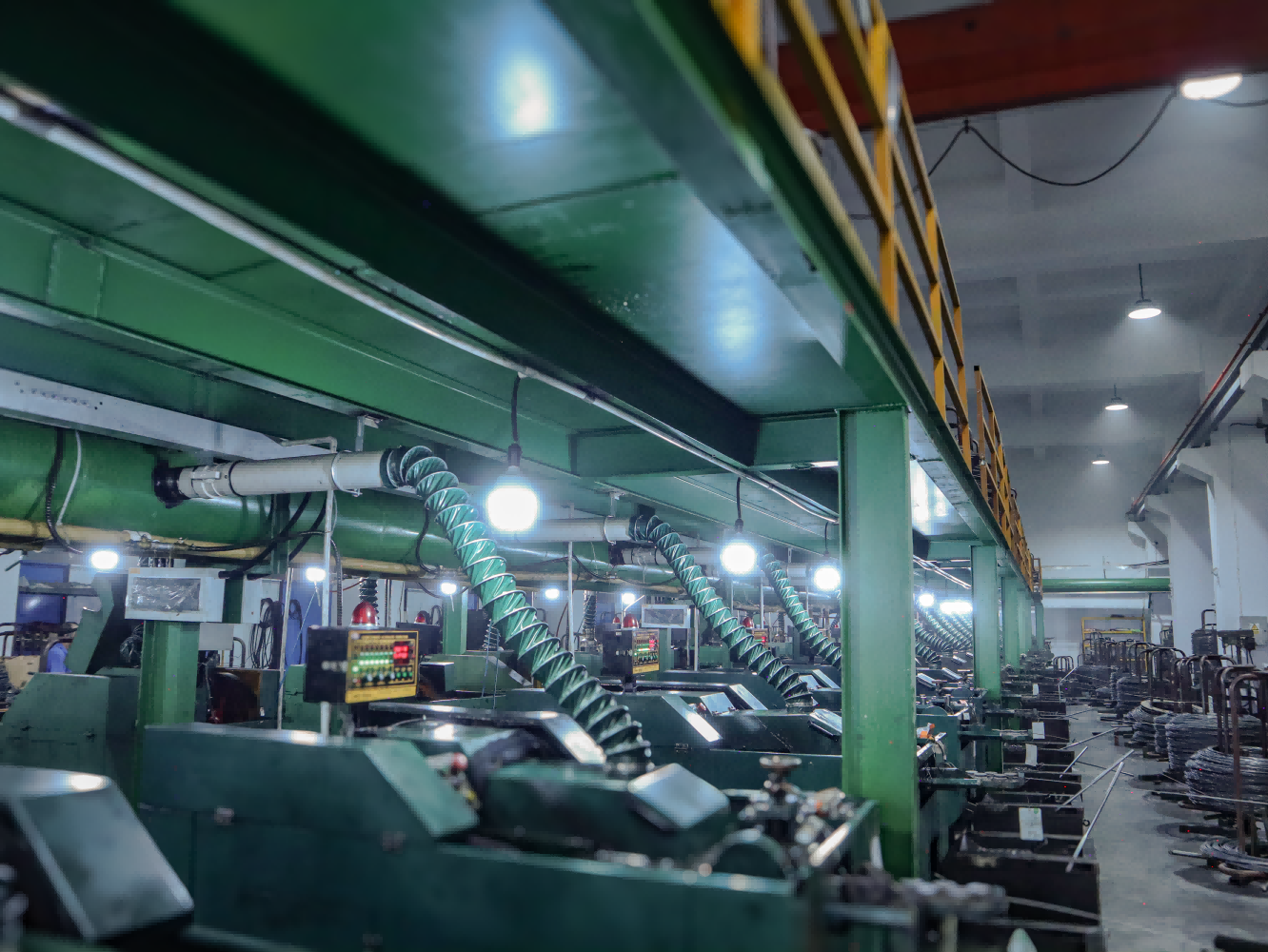
When discussing top-tier coating applications, Shanghai Malaxy Fastener Co., Ltd. stands out as a benchmark for quality and scale.
Located in Haiyan, Jiaxing, China—the heart of the fastener industry—Malaxy brings over 20 years of manufacturing expertise to the global market. They are renowned for their world-class RUSPERT coating technology, which has been a game-changer for outdoor construction and heavy-duty projects.
Why Global Clients Choose Malaxy:
  • Global Footprint: They have successfully exported RUSPERT-coated products to 70+ countries, earning widespread acclaim for durability.

  • High Cost-Performance: Malaxy balances premium protection with competitive pricing, making high-end anti-corrosion accessible for large-scale infrastructure.

  • Certified Quality: Their production processes are fully compliant with international standards, backed by REACH, ROHS, CE, and ISO certifications.

Expert Recommendation: Which to Choose?
  • Choose RUSPERT (via Malaxy): If your project involves outdoor construction, timber structures, or coastal environments where acid rain resistance and aesthetic variety are critical.

  • Choose DACROMET: If you are working with automotive engines or high-heat industrial machinery where thermal stability is the top priority.

Would you like to see the specific technical specifications of Malaxy’s RUSPERT-coated screws for your next international project?


Other Articles

RUSPERT vs. DACROMET – Choosing the Ultimate Armor for Fasteners

RUSPERT outperforms traditional DACROMET in acid rain resistance and environmental friendliness under conventional outdoor conditions, thanks to its chrome-free composite structure; while DACROMET remains irreplaceable in terms of high-temperature stability and zero hydrogen embrittlement. Malaxy’s RUSPERT-coated products offer a cost-effective anti-corrosion solution for large-scale international projects.

Fasteners Are More Than Just Screws: A Guide To Common Types And Their Uses

Fasteners are the silent backbone of every mechanical assembly, yet many engineers and buyers oversimplify them as just “screws.” In reality, selecting the wrong type – a bolt instead of a screw, a flat washer instead of a spring washer, or a low-grade stud for a high-vibration joint – can lead to premature failure, safety risks, and unnecessary maintenance costs.This guide breaks down the technical distinctions between screws, bolts, nuts, washers, expansion anchors, and threaded rods. It covers thread engagement principles, preload generation, anti-loosening strategies, and material-grade matching (from carbon steel to alloy steel, Grades 4.8 to 12.9).With over 20 years of fastener supply chain experience and a manufacturing base in Haiyan, Jiaxing – China’s leading fastener production hub – Shanghai Malaxy Co., Ltd. delivers these categories to more than 70 countries. Understanding fastener types isn’t just basic knowledge; it’s the first step toward safer, longer‑lasting.

Beyond The Salt Spray: What Really Makes A Fastener Last?

Fastener corrosion resistance is often reduced to a single number: “salt spray test hours.” But why does a bolt that passes 1,000 hours in the lab sometimes rust much sooner in the field? Salt spray testing (ISO 9227) is a fast, repeatable accelerated corrosion method. However, lab conditions cannot replicate real-world factors: temperature swings, humidity cycles, mechanical stress, chemical exposure, and galvanic coupling between dissimilar metals. These variables determine actual service life. Experienced engineers never treat salt spray results as an absolute life guarantee. Instead, they use the test as a comparative quality control tool – to verify batch consistency, compare coatings, and determine pass/fail against defined requirements. True reliability comes from a complete quality management system, not a single test report. Key takeaway: Do not chase the highest hour number. Ask: Which standard? How are results interpreted? Does the coating match your environment? read more.