


Double-End Stud Bolts: Types and Key Differences
Introduction
Double-end stud bolts are widely used in industrial machinery, pumps, valves and pipeline connections. Their headless design allows one end to engage a threaded component while the other secures parts with a nut.
For international buyers, understanding DIN standards, material grades and thread dimensions is essential to selecting the right stud bolt and avoiding assembly problems. This guide summarizes the main differences, material options and sourcing trends for 2026.
What Is a Double-End Stud Bolt?
A double-end stud bolt is a headless fastener with threads at both ends. Depending on its design, it may have a plain center shank or continuous threading.
Unlike hex bolts, stud bolts have no integral head. They are useful for assemblies that require secure fastening and repeated maintenance, such as pump housings and industrial equipment.
Expert Insight: Correct thread engagement, compatible nuts and proper tightening are just as important as the fastener's strength.

Main Types of Double-End Stud Bolts
DIN 938, DIN 939 and DIN 835 are common references for metric tap-end studs. Their main difference is the specified metal-end thread length.
Standard | Approx. metal-end length | Main difference |
|---|---|---|
DIN 938 | \(1d\) | Shorter engagement end |
DIN 939 | \(1.25d\) | Intermediate engagement |
DIN 835 | \(2d\) | Longer engagement |
Here, \(d\) represents the nominal thread diameter. Actual dimensions and available sizes depend on the relevant standard edition and product specification.
Other options include fully threaded studs and customized designs with specified diameters, lengths, thread configurations and finishes.
Expert Insight: Always specify the required standard and drawing. Ordering by the generic term “double-end stud bolt” alone may result in incorrect thread lengths or overall dimensions.

Materials, Grades and Surface Finishes
Material selection depends on mechanical loads, corrosion exposure, operating temperature and the applicable engineering requirements.
Material or grade | Typical consideration |
|---|---|
Carbon steel, Class 8.8 | General industrial fastening |
Alloy steel, Class 10.9 | Higher-strength applications |
ASTM A193 Grade B7 | Specified high-temperature and high-pressure service |
ASTM A320 Grade L7 | Specified low-temperature bolting applications |
Stainless steel A2/A4 | Corrosion resistance, depending on the environment |
ISO 898-1 addresses mechanical and physical properties for applicable carbon-steel and alloy-steel fasteners. ASTM A193/A193M and ASTM A320/A320M cover distinct bolting applications and material requirements. Buyers should confirm the governing specification before ordering.
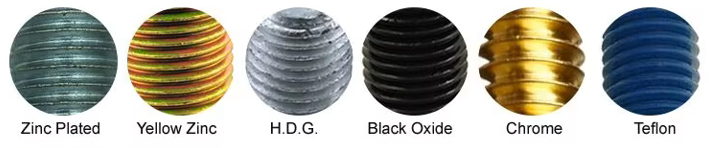
Common finishes include plain, zinc-plated, hot-dip galvanized and zinc-flake coatings. Coatings affect corrosion protection and may change tightening friction.
Expert Insight: Choose material, grade, coating and mating nuts as a complete fastening system. Higher strength alone does not guarantee better corrosion resistance or suitability for every application.
Stud Bolt vs Threaded Rod vs Hex Bolt
These fasteners serve different assembly requirements.
Feature | Double-end stud bolt | Threaded rod | Hex bolt |
|---|---|---|---|
Integral head | No | No | Yes |
Threading | Defined ends; center varies | Usually continuous | Partial or full |
Typical use | Machinery, housings and selected flange joints | Supports and adjustable connections | General mechanical assemblies |
A double-end stud is useful when a headless connection and defined thread engagement are required. A threaded rod provides flexible positioning, while a hex bolt offers an integral head for installation.
Expert Insight: Do not replace a specified stud with threaded rod solely because the nominal diameter matches. Material properties, thread geometry and load requirements may differ.
How to Select and Inspect Stud Bolts
Before purchasing, confirm:
Diameter, overall length and thread lengths.
Metric or Unified thread, pitch and tolerance.
Material grade and mechanical property requirements.
Surface finish and corrosion requirements.
Inspection criteria and required material certificates.
Quantity, packaging and delivery requirements.
Quality checks may include dimensional measurement, thread gauging, hardness testing, material verification and coating inspection. Critical applications may require additional testing and batch traceability.
Expert Insight: Approving a drawing and inspection plan before mass production can reduce mismatched dimensions, rejected shipments and assembly delays.
2026 Fastener Market Trends and Sourcing Considerations
Steel-market conditions and environmental regulations are shaping international sourcing decisions.
The World Steel Association's October 2026 outlook forecast global steel demand at 1,722 million tonnes in 2026, with growth of 1.7% in 2027 to 1,752 million tonnes. These figures relate to steel demand, not fastener consumption directly. (World Steel Association)
The EU's Carbon Border Adjustment Mechanism entered its definitive phase on 1 January 2026. Relevant iron and steel products can include fasteners classified under CN heading 7318. Importers should verify product classification and applicable obligations for each shipment. (European Commission)
For buyers, reliable material records, supplier consistency and delivery planning are increasingly important alongside price.
Expert Insight: Manufacturers that can coordinate production, inspection, documentation and export packaging help simplify procurement for international customers.

Conclusion
Choosing the right double-end stud bolt requires matching the standard, dimensions, material and finish to the application. DIN 938, DIN 939 and DIN 835 differ in metal-end length, while ASTM and ISO specifications address particular material and mechanical requirements.
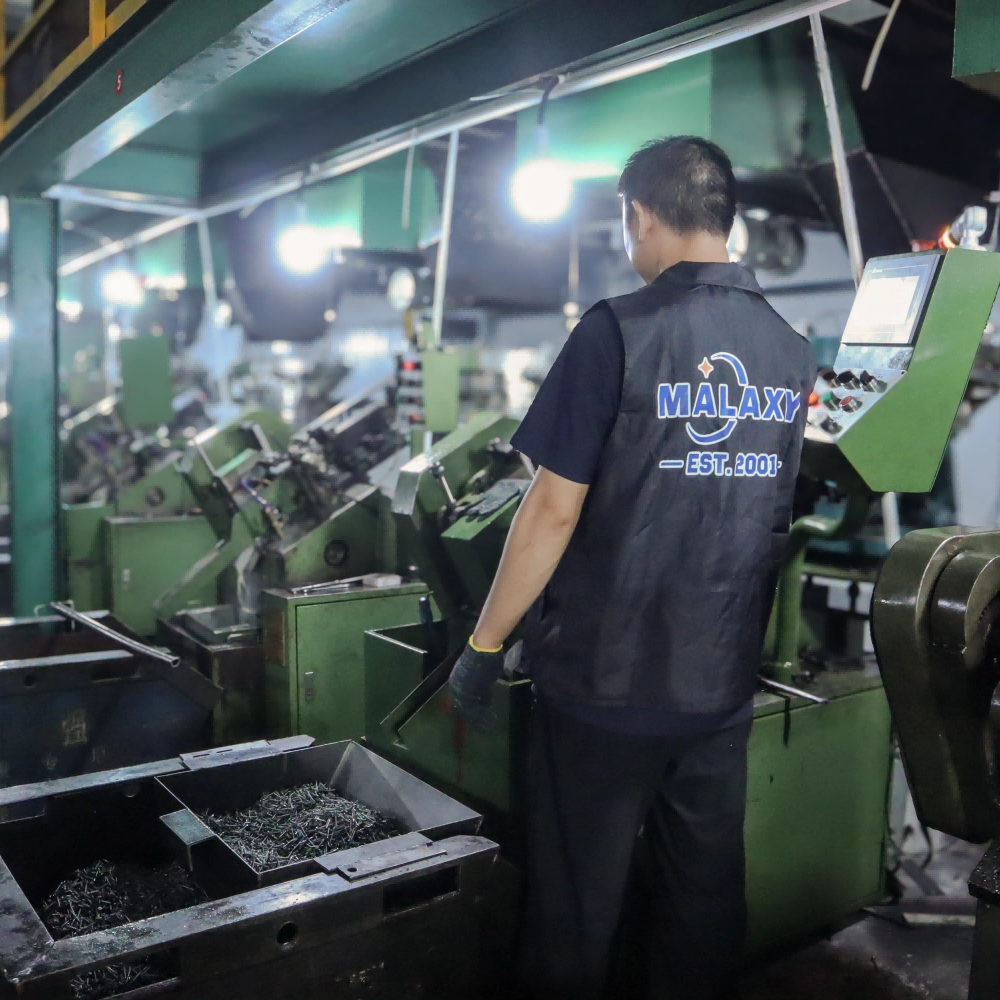
MALAXY is a China-based fastener manufacturer with more than 20 years of production experience, a 50,000 m² factory and OEM/ODM capabilities. Contact our team for standard or customized fasteners, technical specifications and factory quotations.
Other Articles
Inside MALAXY’s Fastener Factory in Haiyan, Zhejiang
10 Important Factors to Consider When Buying Industrial Fasteners: A Complete Guide for Global Buyers
