


Introduction
The rapid growth of electric vehicles (EVs) is transforming the automotive fastener industry.
According to the International Energy Agency (IEA), global electric car sales exceeded 20 million units in 2025, accounting for approximately 25% of new vehicle sales. Global EV battery deployment also reached around 1.2 TWh.
This expansion is creating new requirements for bolts, screws, nuts, washers and threaded inserts used in battery systems, electric motors and lightweight vehicle structures.
The main change is not simply increased fastener consumption, but greater demand for specialized materials, corrosion protection and reliable fastening performance.
1. How EV Manufacturing Is Changing Fastener Demand
Traditional vehicles use fasteners mainly in engines, transmissions and chassis systems. EVs introduce additional requirements for battery enclosures, electrical assemblies and lightweight structures.
EV Application | Common Fasteners | Key Requirements |
|---|---|---|
Battery enclosure | Bolts, screws, nuts | Corrosion resistance |
Battery modules | High-strength bolts | Clamp load stability |
Electric motors | Precision screws | Mechanical reliability |
Vehicle chassis | Structural bolts, nuts | Strength and fatigue resistance |
What are engineered automotive fasteners?
Engineered fasteners are components designed for specific mechanical and environmental requirements, including tensile strength, vibration resistance, corrosion protection and material compatibility.
Expert Insight: Fastener manufacturers should focus on application requirements and product performance rather than competing on unit price alone.
![EV battery components and automotive fasteners.].png](http://iororwxhjpikli5q-static.micyjz.com/cloud/pqBprKlkliSRrnrqnjloko/diandongqichejingujian.png "EV battery components and automotive fasteners.")
2. Materials and Surface Treatments for EV Fasteners
Lightweight vehicle designs increasingly use aluminum alloys, high-strength steel and composite materials. Selecting compatible fastener materials is therefore essential.
Material | Main Advantages | Considerations |
|---|---|---|
Carbon steel | High strength, economical | Requires corrosion protection |
Alloy steel | High mechanical strength | Heat-treatment control |
Stainless steel 304/316 | Corrosion resistance | Strength and galling |
Aluminum alloy | Lightweight | Lower mechanical strength |
Titanium alloy | High strength-to-weight ratio | Higher cost |
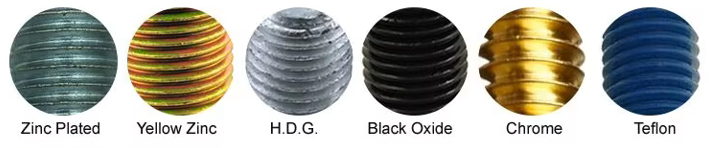
Surface treatments also play an important role.
Coating | Main Characteristics |
|---|---|
Zinc plating | Economical corrosion protection |
Zinc-nickel | Improved corrosion resistance |
Zinc flake | Non-electrolytic protective coating |
Black oxide | Appearance and limited protection |
Passivation | Improves stainless steel surface protection |
Relevant standards include ISO 4042 for electroplated coatings and ISO 10683 for zinc-flake coatings.
Why is coating selection important?
EV fasteners may experience humidity, temperature fluctuations and contact with different metals. Appropriate coatings help reduce corrosion risks and maintain fastening performance. High-strength steel fasteners also require consideration of hydrogen embrittlement.
Expert Insight: Material, coating thickness, friction characteristics and application conditions should be evaluated together before production.
3. Automotive Fastener Standards and Quality Control
Automotive applications require consistent mechanical properties, dimensional accuracy and manufacturing quality.
Standard | Application |
|---|---|
ISO 898-1 | Carbon and alloy steel fastener properties |
ISO 3506-1 | Stainless steel fastener properties |
ISO 4042 | Electroplated coatings |
ISO 10683 | Zinc-flake coatings |
ISO 16047 | Torque/clamp-force testing |
What is IATF 16949?
IATF 16949 is an automotive quality management system standard. It focuses on manufacturing quality processes rather than certifying individual fastener products.
Automotive customers may also require tensile testing, hardness testing, corrosion testing, dimensional inspection and traceability records.
Expert Insight: Reliable fastener production depends on raw-material control, consistent manufacturing processes, heat-treatment management and documented inspections.
![EV battery components and automotive fasteners.]](http://iororwxhjpikli5q-static.micyjz.com/cloud/pnBprKlkliSRrnrqqjorko/minimalist-industrial-bolt-photo.jpg "EV battery components and automotive fasteners.")
4. How to Choose a Reliable Automotive Fastener Supplier
When purchasing automotive fasteners, buyers should evaluate more than price.
Key considerations include:
Material: Carbon steel, alloy steel or stainless steel.
Strength: Appropriate mechanical grade and hardness.
Surface treatment: Coating type and corrosion requirements.
Dimensions: Thread, pitch, length and tolerances.
Quality: Inspection reports and material documentation.
Customization: OEM/ODM production and packaging capabilities.
Expert Insight: Providing technical drawings and complete specifications before quotation helps manufacturers evaluate production feasibility and reduce quality risks.
![MALAXY fastener production line and finished-product inspection.]](http://iororwxhjpikli5q-static.micyjz.com/cloud/prBprKlkliSRrnrqqjpkkq/tupianzhongwenzitigaiyingwen.jpg "MALAXY fastener production line and finished-product inspection.")
5. 2026 EV Market Outlook and Fastener Opportunities
The IEA's 2026 industry analysis highlights continued growth in electric vehicle and battery manufacturing.
Market Indicator | 2025 Data |
|---|---|
Global electric car sales | Over 20 million |
EV sales growth | Approximately 20% |
Share of new car sales | Approximately 25% |
EV battery deployment | 1.2 TWh |
Battery deployment growth | Nearly 30% |
Three trends are particularly important for fastener suppliers:
Lightweighting: Increasing aluminum and composite applications create new material compatibility requirements.
Supply-chain diversification: Expanding EV production creates additional international sourcing opportunities.
Quality traceability: Automotive customers increasingly expect reliable production records and supplier documentation.
The EU Batteries Regulation also introduces mandatory battery passport requirements for relevant EV batteries from February 18, 2027.
Expert Insight: Manufacturers with stable production, customization capabilities and consistent quality control will be better positioned to serve the evolving automotive supply chain.
Conclusion
Electric vehicle growth is reshaping the automotive fastener industry.
Battery systems, lightweight structures and electrical assemblies are creating new demand for specialized bolts, screws, nuts and washers.
Future opportunities will focus on high-strength materials, corrosion-resistant coatings, reliable fastening performance and customized manufacturing.
MALAXY, with over 20 years of manufacturing experience, a 50,000 m² factory and more than 200 employees, provides industrial fasteners and OEM/ODM customization services for international B2B customers.
Frequently Asked Questions
1. What are EV fasteners?
EV fasteners are bolts, screws, nuts, washers and threaded inserts used in battery packs, electric motors, chassis and other vehicle assemblies.
2. What fasteners are used in EV battery packs?
Common products include high-strength bolts, screws, nuts, washers, threaded inserts and rivet nuts.
3. Which materials are suitable for EV fasteners?
Carbon steel, alloy steel, stainless steel, aluminum and titanium may be used depending on strength, weight and corrosion requirements.
4. Why is corrosion resistance important?
Battery enclosures and vehicle underbodies are exposed to moisture, temperature changes and road salt. Suitable materials and coatings help protect fastening performance.
5. What is zinc-flake coating?
It is a non-electrolytically applied protective coating that provides corrosion resistance and is commonly considered for high-strength steel fasteners.
6. What is the difference between ISO 898-1 and ISO 3506-1?
ISO 898-1 covers carbon and alloy steel fastener mechanical properties, while ISO 3506-1 covers specified stainless steel fastener properties.
7. Why is torque testing important?
Torque testing evaluates the relationship between tightening torque and clamp force, helping ensure reliable bolted connections.
8. Can manufacturers provide customized automotive fasteners?
Yes. Manufacturers can produce customized bolts, screws and nuts according to customer drawings, materials, dimensions and agreed quality requirements.
Other Articles

EV Growth Is Reshaping Engineered Fastener Demand

Plastic Screw Installation Torque: Prevent Stripping, Cracking & Pull-Out
