


For engineers and procurement specialists, selecting the right fastener for an application is not merely about matching thread size—it is about balancing competing demands: strength versus corrosion resistance, initial cost versus long-term reliability, and ease of installation versus code compliance. The consequences of a wrong decision range from premature maintenance failures in outdoor structures to catastrophic joint loosening under vibration. This guide examines the core trade-offs in industrial fastener selection, reviews the latest market data, and provides actionable insights for B2B buyers seeking reliable solutions.
Setting the Baseline: The Industrial Fasteners Market in 2025–2026
The global industrial fasteners market reached approximately USD 93 billion in 2025 and is projected to expand at a compound annual growth rate of 4.3% to 6.3% through 2030, depending on the source. The Asia-Pacific region dominates global demand, accounting for 36.5% of market share in 2025, driven by infrastructure development and automotive manufacturing expansion in China, India, and Southeast Asia. Key market trends include increasing demand for high-strength fasteners, wider adoption of corrosion-resistant coatings, and growing use of aerospace-grade and lightweight fastening solutions. For international buyers, China alone accounts for over 30% of global fastener production, with specialized manufacturing clusters in Zhejiang, Jiangsu, and Guangdong provinces offering vertically integrated production—from raw material sourcing and cold forging to heat treatment and surface finishing.
Material Selection: Stainless Steel vs. Carbon Steel
The choice between stainless steel fasteners and carbon steel fasteners is perhaps the most frequent decision point in fastener specification, and it hinges on two fundamental variables: environmental exposure and mechanical load requirements.
Corrosion performance. Stainless steel fasteners, particularly A2 (304) and A4 (316) grades, contain a minimum of 10.5% chromium, which forms a passive oxide layer that continuously regenerates even when scratched. This makes them the preferred choice for outdoor applications where corrosion resistance is critical—marine environments, chemical processing facilities, coastal infrastructure, and food-grade installations. In outdoor metal structures, solar installations, or maritime elements, stainless steel guarantees long-term protection without the need for additional coatings.
Carbon steel, by contrast, has no inherent corrosion resistance. A carbon steel screw on its own is susceptible to rust and corrosion. However, surface treatments such as zinc plating, hot dip galvanized coating, or premium coatings like Dacromet and Geomet significantly enhance its performance. Zinc plating is the most widely used finish globally, but it must be understood as a sacrificial coating—once the zinc layer is compromised in a coastal or chemically aggressive environment, the underlying steel will begin to corrode. A well-applied hot dip galvanized coating can provide decades of service in moderately aggressive environments, but any breach in the coating creates a localized corrosion cell.
Mechanical strength. From a pure strength perspective, carbon steel remains the reference material. Metric grades 8.8, 10.9, and 12.9, as well as SAE Grade 5 and Grade 8 bolts, offer tensile and yield strengths significantly higher than standard stainless steel grades. Grade 8 bolts achieve minimum tensile strengths of 150,000 psi (approximately 1,034 MPa), while Class 10.9 metric bolts reach 1,040 MPa minimum tensile strength. A typical 18-8 stainless steel bolt, by contrast, has a minimum tensile strength of approximately 65,000 psi with a yield strength around 30,000 psi—less than half the yield strength of a Grade 5 carbon steel bolt. When structural loading is the primary objective, carbon steel grades—especially high tensile fasteners such as Grade 8.8 and Grade 10.9—are the preferred choice.
Cost and lifecycle value. Stainless steel fasteners typically carry an upfront premium of three to four times the cost of carbon steel equivalents. However, this initial cost difference must be weighed against lifecycle value. In high-risk corrosive environments—marine installations, chemical plants, coastal bridges—the material properties of stainless steel can reduce total lifecycle cost by eliminating expensive recoating operations, preventing premature replacement, and avoiding unplanned downtime. As one industry analysis notes, cost is meaningless without consideration of value; the manufacturer of a high-end outdoor barbecue grill selecting stainless steel fasteners that resist corrosion longer than the product‘s expected lifespan demonstrates a commitment to product integrity and customer satisfaction that justifies the premium.
A practical decision framework. For environments with constant exposure to moisture, salt spray, or chemicals, A4 (316) stainless steel is the more reliable and durable choice, despite its higher initial cost. The molybdenum content of A4 stainless steel provides enhanced resistance to chloride-induced pitting, making it suitable for coastal and marine applications. For internal structures, general industrial machinery, or applications where environmental contact is minimal, carbon steel with appropriate surface treatment—such as zinc plated or hot dip galvanized finishes—offers an economical and effective solution. For projects requiring both load-bearing capacity and corrosion resistance, stainless steel in grade A4-80 provides a competitive balance between mechanical performance and corrosion protection, offering tensile strength comparable to Grade 5 carbon steel with superior environmental durability.
Anti-Loosening Solutions: Performance Under Vibration
Threaded fasteners have an inherent limitation: they loosen under vibration. This is not a theoretical concern but a well-documented engineering reality. In vibrating environments, loss of clamping force can lead to increased maintenance frequency—and, in severe cases, fatal accidents.
Peer-reviewed research has quantified the comparative performance of various anti-loosening devices. A comprehensive study published in Mechanism and Machine Theory tested nylock nuts, aerotight nuts, chemical locking compounds, cleveloc nuts, flat washers, nylon washers, serrated washers, and spring washers under accelerated vibration conditions. The results clearly establish a hierarchy: chemical locking demonstrated the best anti-loosening characteristics, followed by nylock nuts and aerotight nuts. Notably, conventional nuts without any locking feature performed substantially worse, and the research found that loosening becomes considerably less when initial clamping force exceeds 1.1 tons for metric threaded bolts and 0.8 tons for BSW bolts.
Independent product-level testing reinforces these findings. In accelerated vibration tests, split washers—the most commonly specified anti-vibration solution—showed limited effectiveness. Out of 66 fasteners tested with split washers, four came completely loose and an additional 22 were under specification post-test. The split washer’s second anti-rotation mechanism—digging its sharp edge into the parent material—only functions when the parent material is softer than the washer itself, rendering it ineffective in steel-to-steel joints.
Nordlock wedge-locking washers and Loctite threadlockers emerged as the most effective mechanical and chemical solutions respectively. Nordlock washers rely on a two-piece wedge mechanism: fine serrations on the outer faces dig into the parent material, while larger wedge-shaped serrations on the mating faces prevent unscrewing. Any attempted rotation forces the washers to expand, increasing preload rather than allowing loosening. In the same accelerated test protocol, no Nordlock-equipped fasteners came completely loose. Similarly, Loctite 263—a high-strength, primerless threadlocker—prevents loosening by permanently locking and sealing bolt threads, and independent evaluations confirm it outperforms lock washers and other mechanical locking devices.
For engineers specifying fasteners in high-vibration environments—including automotive undercarriages, heavy machinery, industrial compressors, and wind turbine assemblies—the evidence supports prioritizing chemical locking compounds or mechanical locking systems specifically engineered for dynamic loading. Nylon lock nuts (nylock) remain a solid middle-tier option when chemical locking is impractical for maintenance or disassembly considerations.
Structural Screws and Self-Drilling Fasteners: Application-Specific Selection
The fastener market has seen rapid innovation in application-specific screws, particularly in the construction and metal building sectors.
Self-tapping screws vs. self-drilling screws. These are often confused but serve distinct purposes. Self-tapping screws create mating threads during installation but most require a pre-drilled pilot hole; they are commonly used for sheet metal, plastics, and thin composites in applications such as HVAC assemblies, access panels, and furniture requiring occasional disassembly. Self-drilling screws incorporate an integrated drill point with flutes or cutting edges, allowing them to drill their own pilot hole and tap threads in a single operation. This makes them ideal for hard materials such as steel and aluminum in construction and cold-formed steel connections, where installation speed and accuracy are critical. A properly hardened carbon steel tip on a self-drilling screw can penetrate heavier-gauge steel substrates that would blunt or fail a standard stainless steel point, though the carbon steel point must be protected against corrosion through appropriate surface treatment.
Structural screws vs. lag bolts. In wood construction fasteners, the shift from traditional lag bolts to modern structural screws represents one of the most significant performance-to-efficiency improvements in recent years. A structural screw is a high-strength, code-listed fastener engineered to replace lag bolts, carriage bolts, and even through-bolts in wood-to-wood connections. A 5/16-inch structural screw delivers shear strength of approximately 2,948 lb—equivalent to a 1/2-inch lag bolt—but at 40% less diameter and without requiring pre-drilling. The labor implications are substantial: one contractor reported that replacing half-inch lag bolts with 5/16-inch structural screws on a deck ledger saved 11.5 labor hours, roughly equivalent to USD 920. Structural screws typically require Torx or Spider drive bits, but their ease of installation and time savings give them a decisive edge in most residential and commercial wood-framing applications.
Strength Grades and Torque Specifications
Understanding bolt strength grades is essential for any engineer specifying fasteners for structural or dynamic load applications.
SAE and metric grade equivalencies. For industrial fasteners, the most common SAE grades are Grade 2 (low-carbon steel, 74,000 psi minimum tensile strength up to 3/4 inch), Grade 5 (medium-carbon steel, quenched and tempered, 120,000 psi minimum tensile up to 1 inch), and Grade 8 (medium-carbon alloy steel, quenched and tempered, 150,000 psi minimum tensile up to 1-1/2 inches). Metric equivalents follow a two-digit system: the first digit is one-tenth of the minimum tensile strength in kgf/mm²; the second digit indicates the ratio of yield strength to tensile strength in tenths of a percent. Thus, Class 8.8 has a minimum tensile strength of 800 MPa and a yield strength of approximately 640 MPa (80% of tensile). Class 10.9 (1,040 MPa minimum tensile) and Class 12.9 (1,220 MPa minimum tensile) represent higher-strength tiers for automotive and heavy equipment applications.
Torque values as a function of grade and diameter. Recommended tightening torque increases substantially with both diameter and strength class. For a dry assembly, typical approximate torque values under DIN/ISO standards are as follows:
Diameter | Class 8.8 (Nm) | Class 10.9 (Nm) | Class 12.9 (Nm) |
|---|---|---|---|
M6 | 9.5 | 14 | 17 |
M8 | 23 | 34 | 41 |
M10 | 46 | 68 | 82 |
M12 | 79 | 117 | 140 |
M16 | 195 | 295 | 355 |
Lubricated assemblies typically require a 10–20% reduction in applied torque due to reduced friction. Engineers should always verify fastener head markings before final torque application, as substituting an 8.8 fastener where a 10.9 was specified can lead to severe underclamping or premature failure.
Standards Compliance and Sourcing Considerations
For B2B buyers seeking fasteners for international markets, compliance with recognized standards is non-negotiable. The primary standard systems governing industrial fasteners include:
DIN standards (Deutsches Institut für Normung)—widely used across Europe and many global markets. Common DIN designations include DIN 931 for hex bolts with partial thread, DIN 933 for hex bolts with full thread, DIN 934 for hex nuts, and DIN 985 for nylon lock nuts.
ISO standards (International Organization for Standardization)—globally harmonized and increasingly preferred for cross-border trade. ISO 4014 and ISO 4017 correspond to DIN 931 and DIN 933 respectively; ISO 4032 covers hex nuts.
ANSI/ASME standards (American National Standards Institute / American Society of Mechanical Engineers)—prevailing in North American markets. ASME B18.2.1 covers hex bolts and screws; ASME B18.2.2 covers nuts; ASME B18.3 covers socket head cap screws.
GB standards (Guobiao)—China‘s national standards, often equivalent to ISO but with country-specific modifications. GB/T 5782 and GB/T 5783 correspond to ISO 4014 and ISO 4017.
For buyers sourcing from industrial fasteners manufacturers, particularly those seeking custom fasteners wholesale, verification of standards compliance through Material Test Certificates (MTCs) is recommended. Suppliers with IATF 16949 certification (automotive) or ISO 898 compliance (mechanical properties) demonstrate a baseline of quality control. China-based suppliers typically offer a 25–40% cost advantage over Western counterparts while maintaining engineering rigor, but buyers should evaluate suppliers across technical compliance, production control, delivery reliability, and customization flexibility. On-time delivery rates above 95% signal operational stability; lower figures may point to capacity constraints.
Common Selection Mistakes and Corrections
Mistake 1: Assuming all stainless steel fasteners provide the same corrosion resistance. A2 (304) stainless performs well in most environments but can suffer pitting in high-chloride conditions such as coastal or marine applications. A4 (316) stainless contains 2–3% molybdenum, significantly improving chloride resistance. For marine-grade fasteners in saltwater environments, A4 is the minimum acceptable grade.
Mistake 2: Using mechanical lock washers in steel-to-steel joints. As noted above, split washers lose their locking mechanism when the parent material is as hard as the washer itself. For steel structures, specify chemical threadlockers or engineered wedge-locking washers.
Mistake 3: Substituting strength grades without recalculating torque. A Class 10.9 bolt has a proof load of 830 MPa versus 580 MPa for Class 8.8. Using a Class 10.9 fastener in an assembly specified for Class 8.8 without adjusting torque settings risks stripping threads or shearing the fastener head, as high-strength fasteners have a narrower installation torque window.
Mistake 4: Ignoring galvanic corrosion between dissimilar metals. When aluminum structures require steel fasteners—whether carbon steel or stainless steel—the contact interface creates a galvanic cell that accelerates corrosion of the less noble metal (aluminum). Isolate fasteners from aluminum surfaces using nylon washers, PTFE-coated fasteners, or appropriate insulating sleeves.
Key Terms and Definitions
Yield strength: The maximum load at which a material exhibits a specific permanent deformation—the point at which stretching becomes permanent.
Tensile strength: The maximum axial tensile load a material can withstand before fracture.
Proof load: An axial tensile load that a fastener must withstand without evidence of permanent deformation.
Electrochemical corrosion (galvanic corrosion): Accelerated corrosion that occurs when dissimilar metals are in electrical contact in the presence of an electrolyte.
Hydrogen embrittlement: A phenomenon where hydrogen atoms absorbed during manufacturing or installation weaken high-strength steels, potentially causing sudden cracking under stress.
Final Recommendations
The optimal fastener for any application emerges from a structured evaluation of three variables: the operating environment (moisture, chemicals, salt), the mechanical load requirements (static, dynamic, vibration exposure), and the total lifecycle cost. For marine and chemical environments, specify A4 (316) stainless steel fasteners with appropriate anti-loosening measures such as chemical threadlockers. For general indoor structural applications requiring high strength, carbon steel hex bolts in Grade 8.8 or Grade 10.9 with zinc plating offer the most cost-effective solution. For vibration-prone equipment, prioritize chemical locking compounds or engineered wedge-locking washers over conventional split washers. For wood-to-wood construction connections, structural screws have largely superseded lag bolts for all but the most code-restricted heavy-timber applications.
When sourcing these components globally, pay particular attention to standards compliance, third-party test certifications for corrosion resistance (such as neutral salt spray reports), and supplier track records. Small deviations in specifications today can compound into significant structural risks over time.
For specific applications requiring custom high-strength or corrosion-resistant fasteners, technical data sheets and laboratory test results—including salt spray performance under ASTM B117 protocols and tensile verification per ASTM F606—are available upon request. Shanghai Malaxy Industry Co., Ltd. maintains ISO 9001-certified quality controls and provides third-party Material Test Certificates for all high-tensile and stainless product lines. Consult with your engineering team to validate fastener selection against the specific load requirements and environmental conditions of your project.
Other Articles
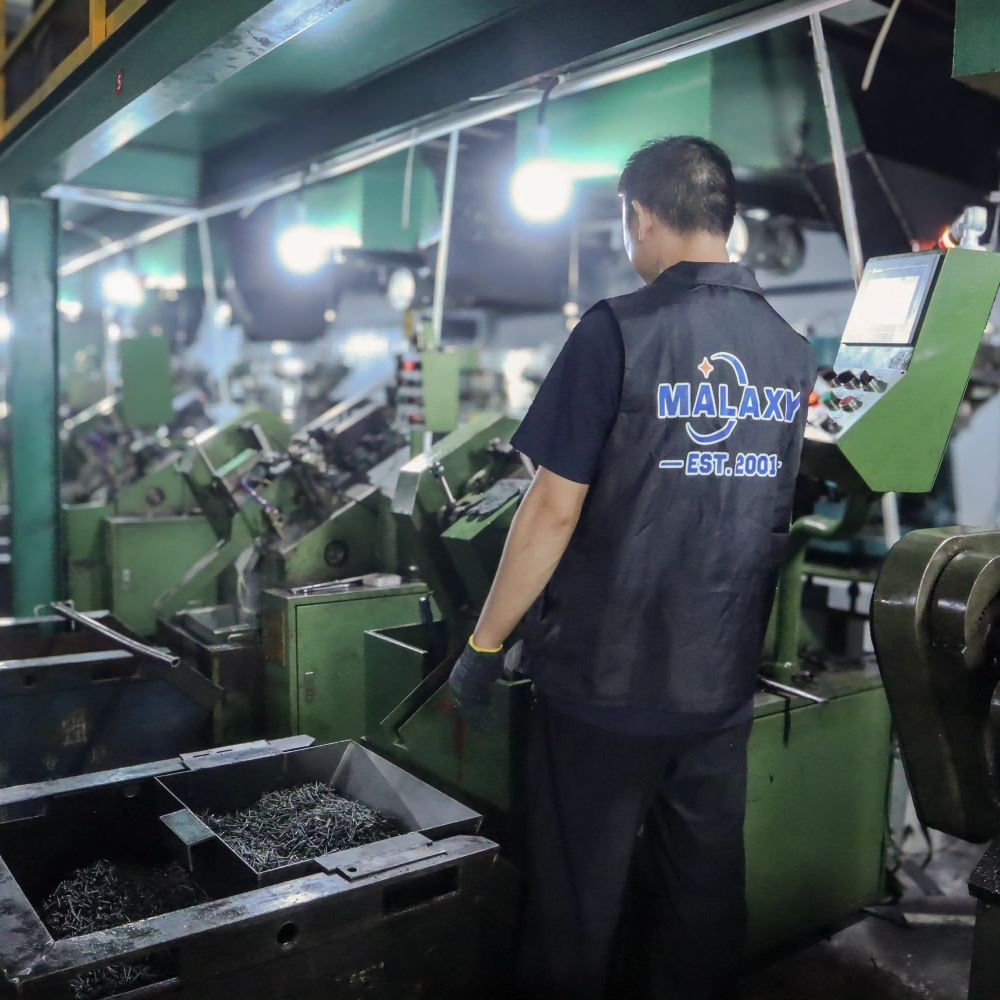
Inside MALAXY’s Fastener Factory in Haiyan, Zhejiang
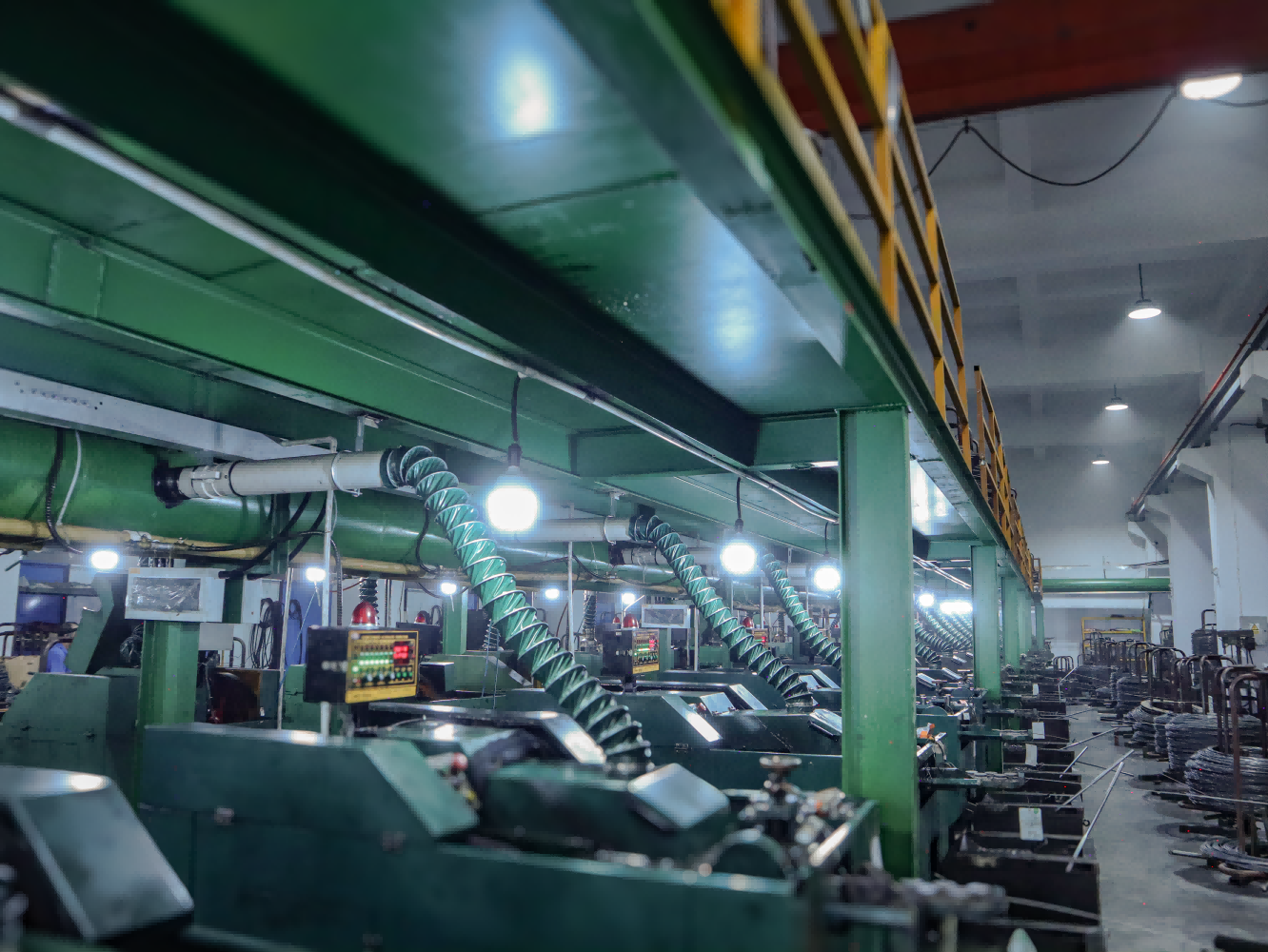
10 Important Factors to Consider When Buying Industrial Fasteners: A Complete Guide for Global Buyers