

How to Choose the Right Screws for Furniture Assembly
Furniture fastening guide for manufacturers, wholesalers and furniture hardware buyers | 2026
Introduction
A furniture screw may be a small component, but choosing the wrong one can lead to loose joints, cracked panels, damaged surfaces and costly product returns.
For furniture manufacturers, selecting the right fastener means considering more than diameter and length. Panel material, thread design, head type, installation torque and corrosion resistance all affect fastening performance.
There is also a new industry consideration in 2026: furniture repairability and disassembly are receiving greater attention under the EU's Ecodesign for Sustainable Products Regulation (ESPR). A September 2026 Swedish industry report specifically identifies furniture joints, fasteners, repair information and material traceability as areas requiring preparation.
This guide explains how to select suitable furniture screws and what professional buyers should check before placing bulk orders.
1. What Are the Main Types of Furniture Assembly Screws?
Furniture assembly screws are fasteners designed to connect wood panels, engineered boards, metal fittings and other furniture components. Their thread design, head shape and length determine how effectively they hold different materials together.
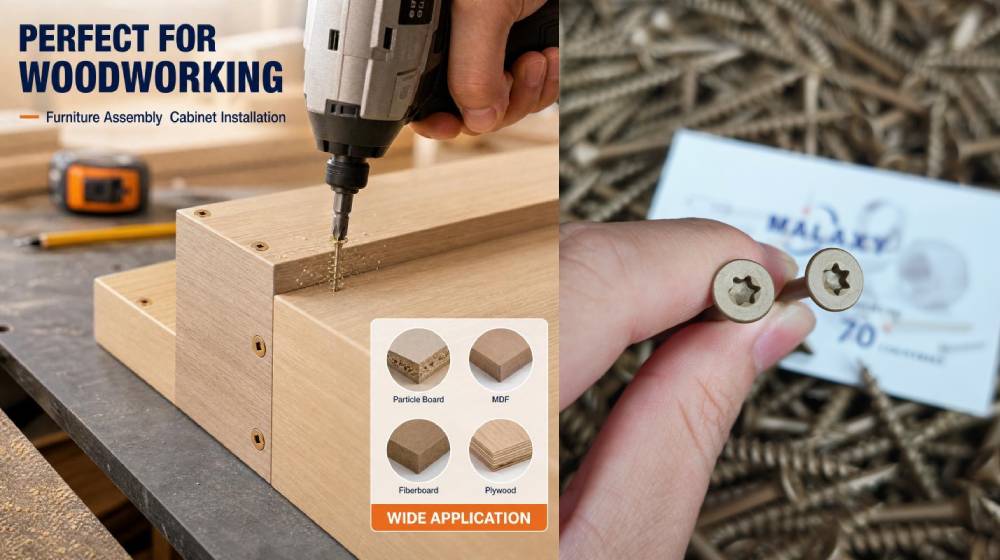
Common Furniture Screw Types
Screw Type | Main Application | Key Advantage |
|---|---|---|
Chipboard Screw | Particleboard, MDF | Strong thread engagement |
Confirmat Screw | Flat-pack furniture, cabinets | Rigid panel connections |
Wood Screw | Solid wood furniture | Reliable wood fastening |
Machine Screw | Metal fittings, threaded inserts | Accurate threaded connection |
Self-Tapping Screw | Metal brackets and fittings | Forms its mating thread |
Confirmat Screws vs. Chipboard Screws
Confirmat screws have a specialized body and thread geometry for joining wood-based panels, particularly in cabinet and flat-pack furniture. Chipboard screws are more versatile for general fastening into particleboard and compatible engineered boards.
Neither is universally better. Joint design, panel thickness and drilling accuracy determine the right choice.
Expert Insight – MALAXY Manufacturing Experience
For mass-produced furniture, standardize screw specifications according to the assembly method. Using the same screw for every panel connection can increase stripping, loose joints and assembly defects.
2. How to Choose Screws for MDF, Particleboard, Plywood and Solid Wood
The furniture material should determine the screw selection, not the other way around.

Furniture Material Comparison
Material | Recommended Screws | Main Consideration |
|---|---|---|
MDF | MDF-compatible screws, confirmat screws | Pilot holes and edge splitting |
Particleboard | Chipboard screws, confirmat screws | Thread holding strength |
Plywood | Wood screws, chipboard screws where suitable | Veneer thickness and penetration |
Solid Wood | Wood screws | Grain direction and splitting |
Important MDF Installation Data
The European Panel Federation provides the following general MDF fixing recommendations:
Face fixing: at least 12 mm from the board edge.
Face fixing: at least 25 mm from corners.
Edge fixing: at least 70 mm from corners.
Pilot-hole diameter: approximately 85–95% of screw core diameter.
Pilot holes should extend at least 1 mm beyond the expected screw insertion depth.
These recommendations must be adjusted to the actual board thickness, screw specifications and application
Expert Insight – MALAXY Manufacturing Experience
For OEM furniture projects, always test screws using the actual MDF, plywood or particleboard samples. Testing the complete joint is more reliable than selecting screws from dimensions alone.
3. How to Select Screw Size, Thread and Head Design
Correct screw dimensions help improve joint strength, installation efficiency and finished appearance.
Three Important Selection Factors
1. Diameter and Length
The screw must provide sufficient engagement in the receiving panel without penetrating the opposite surface. Consider panel thickness, fitting thickness, countersink depth and joint geometry.
2. Thread Design
Coarse threads are commonly used for wood-based materials, while fine threads are generally associated with metal fastening and other specific applications.
3. Head and Drive Type
Design | Common Application |
|---|---|
Flat / Countersunk Head | Flush furniture surfaces |
Pan Head | Metal brackets and furniture fittings |
Wafer Head | Wider bearing surface |
Phillips Drive | General furniture assembly |
Pozidriv Drive | Furniture and cabinet installation |
Torx Drive | Improved driver engagement |
How to Prevent Furniture Screw Failure
Use the correct pilot-hole diameter, maintain sufficient edge distance, select a compatible driver bit and control installation torque.
For furniture production lines, dimensional consistency is especially important. Check major diameter, core diameter, length, thread pitch, head dimensions and drive recess.
Expert Insight – MALAXY Manufacturing Experience
When ordering in bulk, provide technical drawings or approved samples. Two screws with identical nominal diameters and lengths may have different thread profiles and installation performance.
4. Which Screw Material and Surface Finish Should You Choose?
Furniture screws are commonly manufactured from carbon steel and stainless steel. Their surface treatments influence corrosion resistance, appearance and installation characteristics.
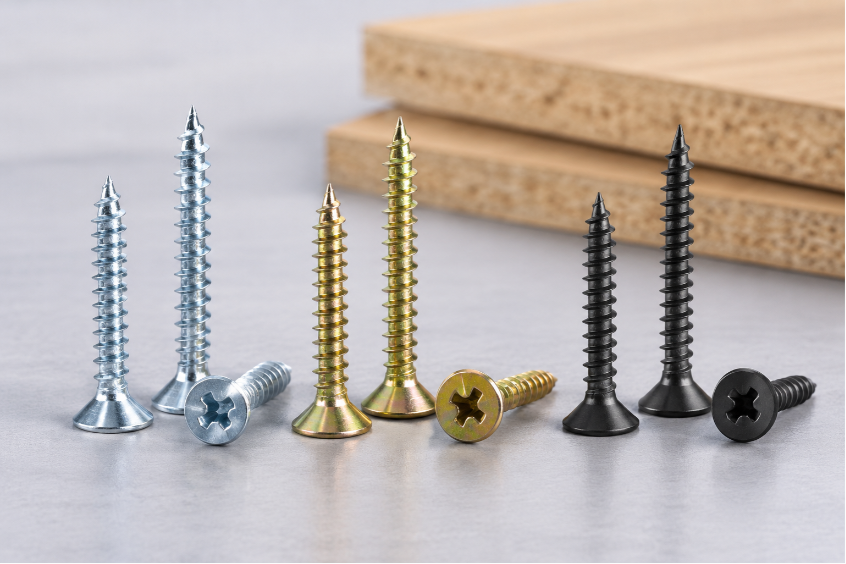
Material Comparison
Material | Advantages | Typical Application |
|---|---|---|
Carbon Steel | Economical, versatile | Indoor furniture |
Stainless Steel 201 | General corrosion resistance | Selected indoor applications |
Stainless Steel 304 | Better corrosion resistance | Humid furniture environments |
Stainless Steel 316 | Higher chloride resistance | More demanding environments |
Common Surface Finishes
Zinc Plated: Economical corrosion protection.
Yellow Zinc: Decorative yellow appearance.
Black Oxide: Dark appearance for selected indoor applications.
Nickel Plated: Decorative metallic finish.
Phosphate: Functional coating used in selected fastening applications.
Dacromet / Geomet: Zinc-based protective coating technologies.
Relevant International Standards
Standard | Main Application |
|---|---|
ISO 4042:2022 | Electroplated fastener coating systems |
ISO 3506-1:2020 | Stainless steel fastener mechanical properties |
ISO 9227 | Salt spray corrosion testing |
ISO 4042 also has Amendment 1 published in 2026. Buyers sourcing coated fasteners should confirm the applicable current requirements. ISO 3506-1 addresses specified mechanical and physical properties, not every functional performance requirement of a furniture screw.
Fasteners — Electroplated coating systems+2
Expert Insight – MALAXY Manufacturing Experience
Do not select coatings based only on color. Specify coating type, environmental exposure, test method and acceptance criteria. For humid environments, compare stainless steel and coated carbon steel using actual application requirements.
5. 2026 Furniture Industry Trends: Repairability, Customization and Quality
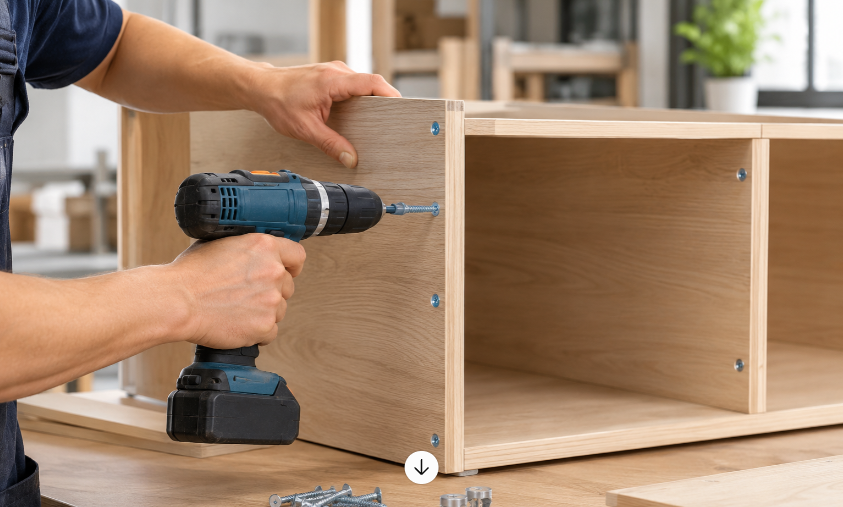
Furniture manufacturing is increasingly influenced by modular construction, product durability, repairability and supply-chain traceability.
Why Is Furniture Repairability Becoming Important?
The EU's Ecodesign for Sustainable Products Regulation (ESPR) entered into force in July 2024. Furniture is among the priority product groups in the 2025–2030 implementation work plan.
A Swedish report published on September 14, 2026, specifically examines furniture-sector preparedness for repairability requirements. It identifies joints, fasteners, disassembly, repair information and material traceability as important areas for manufacturers to review.
This is an industry preparation trend, not a claim that every furniture screw is already subject to a new mandatory EU requirement.
What Does This Mean for Furniture Fastener Buyers?
Buyers should increasingly consider:
Removable and replaceable fastening systems.
Consistent screw specifications across product ranges.
Reliable materials and coating documentation.
Customized fasteners for modular furniture.
OEM packaging and component traceability.
Furniture Screw Quality Inspection
Before approving a bulk order, buyers should check:
Raw material and material grade.
Screw diameter and length.
Thread profile and pitch.
Head dimensions and drive compatibility.
Surface coating and appearance.
Hardness and relevant mechanical properties.
Installation and withdrawal performance.
Packaging, labeling and batch consistency.
Conclusion
Choosing the right furniture assembly screws requires matching the fastener to the panel material, joint structure, dimensions and operating environment.
Chipboard screws and confirmat screws are common choices for engineered wood furniture, while wood screws and machine screws serve other furniture applications.
As repairability, modular furniture and manufacturing efficiency gain attention in 2026, buyers should prioritize reliable fastening performance, consistent production quality and flexible customization.
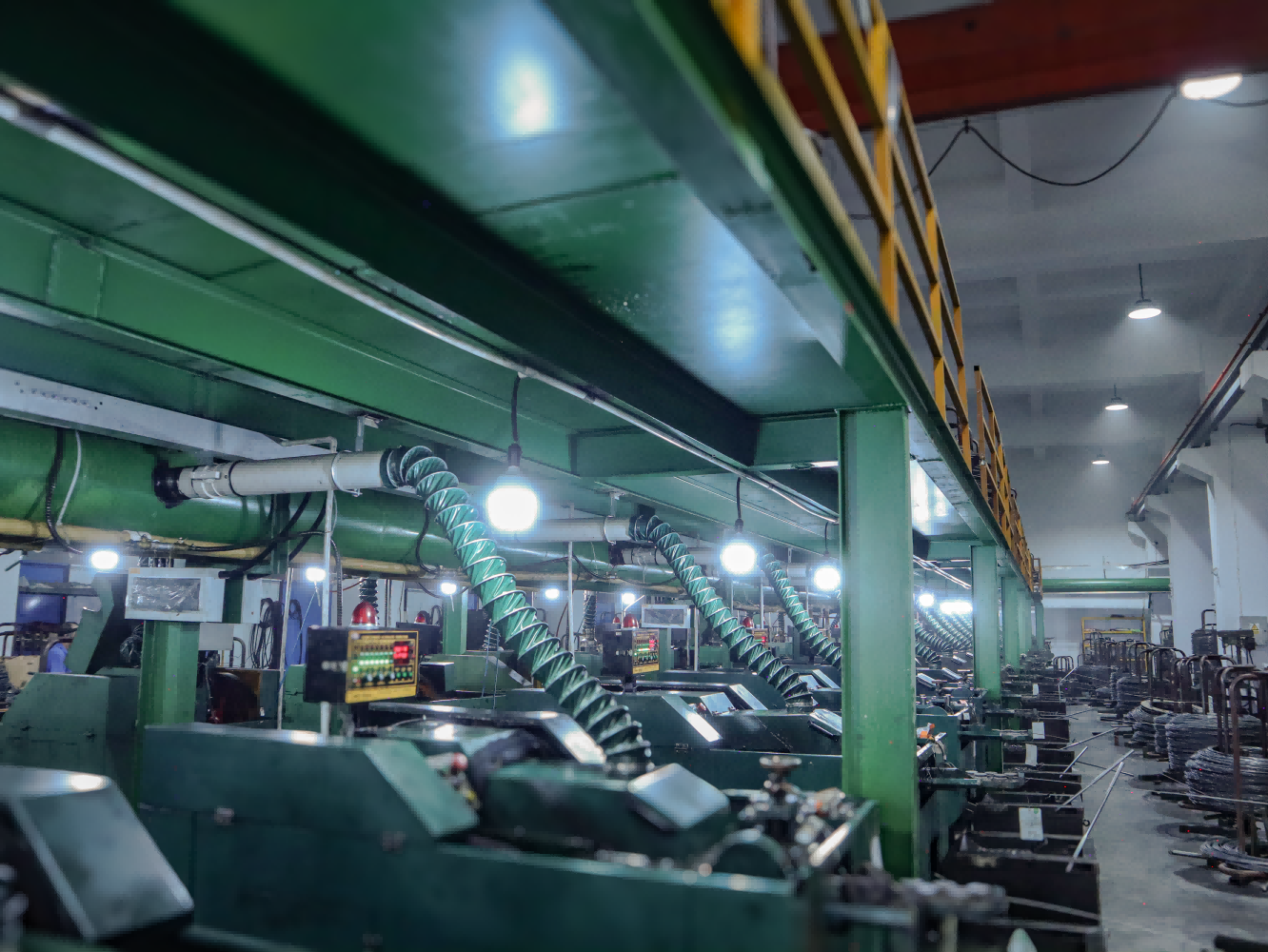
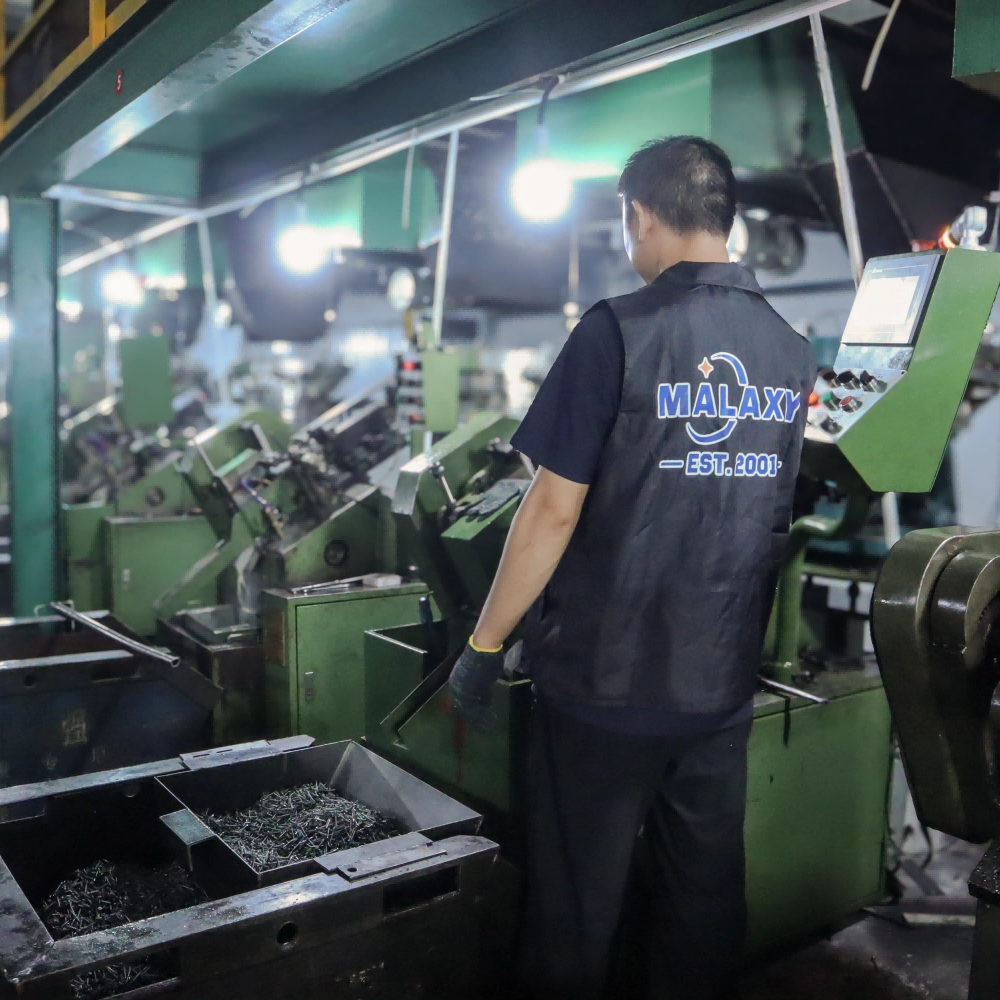
MALAXY combines more than 20 years of fastener manufacturing experience with a 50,000 m² factory, 200+ employees and OEM/ODM capabilities to support international furniture hardware buyers.
FAQ
1. What are the best screws for furniture assembly?
Chipboard screws and confirmat screws are popular for engineered wood furniture. Wood screws are suitable for solid wood, while machine screws are commonly used with threaded metal fittings.
2. What size screws are commonly used for furniture?
Common commercial furniture screw ranges vary by application. Diameter and length should be selected according to board thickness, joint construction and required thread engagement.
3. Are confirmat screws better than wood screws?
Confirmat screws are specialized for engineered wood panel connections. Traditional wood screws are generally used for solid wood and other compatible timber applications.
4. Can I use regular wood screws in MDF?
Some wood screws are suitable, but MDF-compatible screws are preferable. Correct pilot-hole preparation and edge distances help reduce splitting and improve fastening performance.
5. Which furniture screws are best for particleboard?
Chipboard screws and confirmat screws are common choices. The final selection depends on panel thickness, joint structure, screw dimensions and installation method.
6. Are stainless steel screws necessary for furniture?
Not always. Zinc-plated carbon steel is suitable for many indoor applications. Stainless steel 304 or 316 may be preferred in humid or corrosive environments.
7. What is the difference between coarse and fine thread screws?
Coarse threads have wider spacing and are commonly used in wood-based materials. Fine threads have closer spacing and are often used in metal fastening applications.
8. Can MALAXY manufacture customized furniture screws?
Yes. MALAXY supports OEM and ODM projects, including customized diameters, lengths, head styles, thread designs, materials, coatings and private-label packaging.
Other Articles

Why Choose MALAXY Roofing Screws? Quality, Sealing & Durability
Inside MALAXY’s Fastener Factory in Haiyan, Zhejiang