


What Are Self-Drilling Screws Used For? 10 Key Applications
Pre-drilling holes in steel is slow, expensive, and error-prone. Self-drilling screws — also called Tek screws — solve that with a drill-bit tip that cuts through metal and taps its own thread in one step. No pilot hole. No second pass.
Here are the 10 most common applications, plus what you need to know to pick the right one.
How They Work
The drill point comes in different sizes, rated by how thick a material they can penetrate:
Point | Max Steel | Typical Use |
|---|---|---|
#1 | 1.5 mm | HVAC duct, thin sheet |
#2 | 3.0 mm | Roofing, cladding |
#3 | 6.0 mm | Structural steel |
#4 | 12.0 mm | Heavy steel, base plates |
Coatings: Zinc for indoor, hot-dip galvanized for outdoor, stainless steel for coastal or chemical environments. Wrong coating = early failure.
10 Applications
1. Metal Roofing
The biggest use case. Fastens corrugated sheets to purlins with an EPDM washer sealing the penetration. Length = sheet + purlin + 25mm embedment.
2. Steel Framing
Stud-to-track, bridging, bracing — thousands of screws per building. For structural connections, use screws tested to ASTM C954.
3. HVAC Ductwork
Speed matters when you're making 5,000+ connections on a commercial install. Use #1 or #2 points on thin-gauge duct.
4. Solar Panel Mounting
Racking systems need 25+ year durability. Watch for galvanic corrosion between aluminum rails and carbon steel screws — use stainless or isolation washers.
5. Sandwich Panels
Specialized screws that penetrate both skins without crushing the insulation core. Through-fix and concealed-fix versions available.
6. Sheet Metal Fabrication
Enclosures, appliance housings, equipment panels. Point number and head style depend on material thickness and surface flush requirements.
7. Wood-to-Metal
Attaching timber to steel substrates. Uses a #17 drill point with coarse threads — grips the wood, cuts through the metal underneath.
8. Electrical & Data Centers
Conduit supports, cable trays, rack assembly. Clean-point technology to avoid metal shavings near sensitive equipment.
9. Automotive
Body-in-white, underbody shields, interior trim. Billions per year, all to strict OEM specs.
10. Industrial MRO
Guards, signage, safety barriers, retrofit work. The maintenance team's go-to fastener for fixing things to existing steel.

Selection Checklist
Three things to get right:
Point number — match to material thickness. Wrong point = burned tip.
Coating — match to environment. Zinc indoors, HDG outdoors, stainless for harsh conditions.
Length — total material thickness + 25mm minimum embedment.
Common mistakes: wrong point number, over-driving (strips threads), cheap coating outdoors, no torque control, using non-structural screws structurally.

From Our Factory
At MALAXY in Haiyan, China, we've made self-drilling screws for 20+ years and shipped to 70+ countries. What we check on every production run:
Wire rod — every batch tested for composition
Heat treatment — point hardness Rockwell C 56-62, shank stays ductile
Coating thickness — XRF tested for uniformity
Point geometry — measured to spec, every run
A fraction of a millimeter off in flute length changes drilling performance. We don't ship "close enough."
FAQ
Q: Self-drilling vs self-tapping — what's the difference? Self-tapping needs a pre-drilled hole. Self-drilling drills its own hole. All self-drilling screws are self-tapping, not vice versa.
Q: Can I use them on stainless steel? Standard carbon-steel self-drilling screws won't cut stainless. Use hardened versions rated for it, or pre-drill and use self-tapping screws.
Q: How long do they last? Zinc (indoor): 10-15 years. HDG (outdoor): 20-30 years. Stainless: 50+ years.
Q: What size for metal roofing? #2 or #3 point, EPDM washer, length = sheet + purlin + 25mm.
Q: Are they strong enough for structural use? Only if tested for it. Look for published shear/tension data and ASTM C954 compliance.
Need the Right Self-Drilling Screws?
Wrong spec means costly callbacks. Contact MALAXY → to discuss your project requirements. 20 years manufacturing, 70+ countries served.
Other Articles
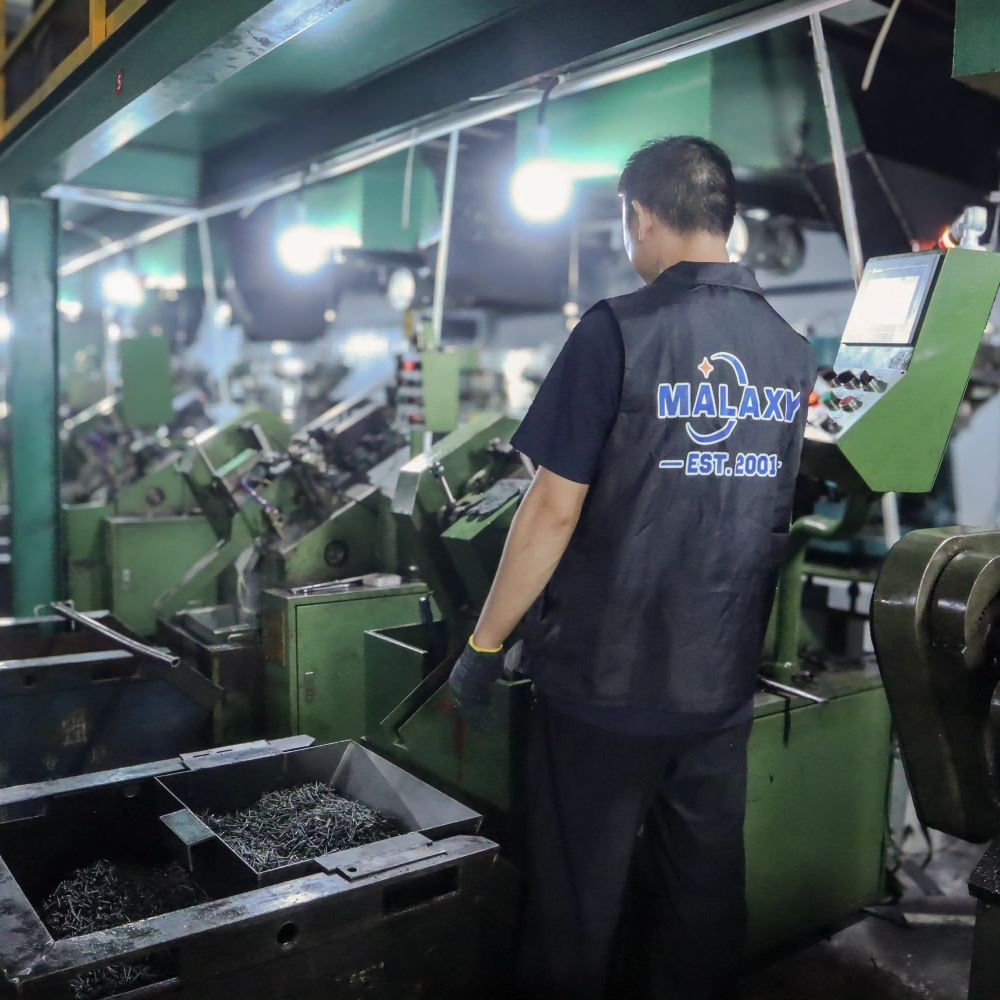
Inside MALAXY’s Fastener Factory in Haiyan, Zhejiang
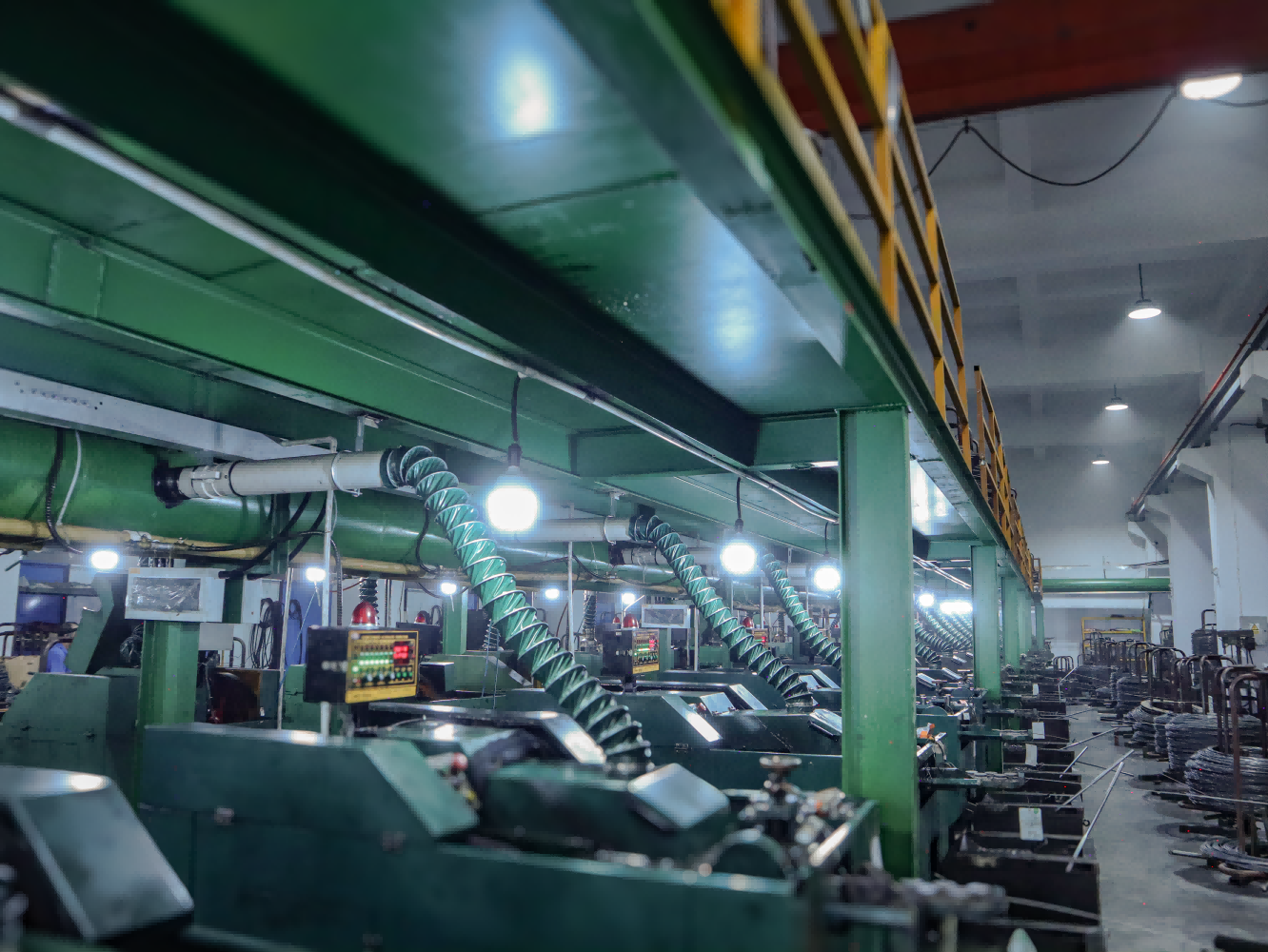
10 Important Factors to Consider When Buying Industrial Fasteners: A Complete Guide for Global Buyers
