


1. The Engineering Logic: Self-Drilling vs. Self-Tapping Screws
In modern construction and manufacturing, the distinction between self-drilling and self-tapping screws is fundamental to project efficiency. While both are designed to create their own threads, their point geometries serve vastly different mechanical purposes.
Feature | Self-Drilling Screw (Tek Screw) | Self-Tapping Screw |
Point Geometry | Drill bit-shaped tip (Point #2, #3, #4, #5) | Sharp (Type A/AB) or Blunt (Type B) |
Material Thickness | Up to 12.5mm (Heavy gauge steel) | Thinner sheet metals or plastics |
Pre-drilling | Not required (Integrated drill bit) | Mandatory pilot hole required |
Primary Standard | ISO 15480 / DIN 7504 | ISO 1478 / DIN 7981 |
Application Logic | Wood-to-metal or Metal-to-metal | Plastics, soft metals, or wood framing |
Because self-drilling screws perform drilling, tapping, and fastening in a single motion, they significantly reduce labor costs. However, engineers must select the correct "point size" (e.g., a #3 point for 4.5mm steel vs. a #5 point for 12mm steel) to avoid drill burnout.
2. Specialized Fasteners for Targeted Applications
Roofing & Tek Screws: The Weather-Tight Seal
Roofing projects are exposed to extreme thermal cycling and UV radiation. Consequently, roofing screws must incorporate an EPDM (Ethylene Propylene Diene Monomer) washer. This washer acts as a gasket that remains elastic under temperature fluctuations; therefore, it prevents water ingress while allowing the metal panels to expand and contract. For heavy-duty industrial roofs, Tek screws with a high-profile hex washer head (HWH) provide the necessary stability for high-torque impact drivers.
Structural, Framing, and Deck Screws
The shift toward mass timber and CLT (Cross Laminated Timber) has elevated the role of structural screws.
Structural Wood Screws:
● Engineered with a high-tensile carbon steel core, these screws offer superior withdrawal resistance. Unlike traditional lag bolts, they do not require a pilot hole, which preserves the wood's fiber integrity.
Framing & Deck Screws:
● High-performance
deck screws often feature a "Type 17" point (a notched tip) that acts as a mini-borer. This design prevents wood splitting in hardwoods; thus, it ensures a clean finish in visible outdoor applications.
Framing screws are optimized for shear strength, ensuring that wall studs and trusses remain rigid under seismic or wind loads.
3. The Science of the Joint: Hex Nuts and Threaded Rods
A fastener is not an isolated component; it is part of a structural assembly. In heavy industrial setups, threaded rods and hex nuts must work in perfect mechanical harmony.
Threaded Rods (All-Thread)
Threaded rods are the backbone of HVAC suspension and seismic bracing. Because they provide a continuous thread along their entire length, they allow for infinitely adjustable fastening points. This is critical in leveling heavy machinery or securing structural steel members where standard bolt lengths are unavailable.
Hex Nuts & Grade Compatibility
The hex nut is often the most overlooked failure point. It is a critical engineering rule that the grade of the nut must match or exceed the grade of the rod. Pair a Grade 8.8 threaded rod with a Grade 8 nut to ensure the threads do not strip under tension.
4. Technical Specifications: Material and Coating Performance
Material selection is the primary defense against structural failure and corrosion.
Material Comparison: SS304 vs. SS316
Property | Stainless Steel 304 (A2) | Stainless Steel 316 (A4) |
Chemical Composition | 18% Chrome, 8% Nickel | 16% Chrome, 10% Nickel, 2% Moly |
Corrosion Resistance | Excellent (General use) | Superior (Marine/Coastal use) |
Tensile Strength | High | High (Better creep resistance) |
Cost | Baseline | ~30-50% Higher |
Coating Analysis: Dacromet vs. Zinc Plated
Coating Type | Salt Spray Resistance (Hrs) | Environmental Impact | Key Advantage |
Zinc Plated | 24 - 72 Hours | High (Hexavalent Chrome) | Low cost, bright finish |
Dacromet | 500 - 1500+ Hours | Chrome-free (Eco-friendly) | No hydrogen embrittlement |
Because Dacromet is a non-electrolytic coating, it does not induce hydrogen embrittlement in high-strength fasteners (Grade 10.9 or 12.9); as a result, it is the safest choice for critical structural bolts.
5. Deep Technical Analysis: Grades, Threads, and Torque
Mechanical Grades (ISO 898-1)
Fastener strength is categorized by property classes. A "8.8" grade means:
Nominal Tensile Strength:
1. 800 MPa (The first digit x 100).
Yield Strength Ratio:
2. 80% (The second digit x 10 of the tensile strength). Using a Grade 4.8 screw where an 8.8 is required will lead to catastrophic shear failure.
Thread Precision and Tolerance
Thread pitch and tolerance (e.g., 6g/6H) determine the "fit" of the fastener. Precision threading prevents loosening under vibration—a common cause of failure in roofing and framing applications.
Torque Standards
Torque is the rotational force applied to achieve "Preload" (the clamping force). Over-torquing leads to thread stripping or "necking" of the bolt, while under-torquing leads to fatigue failure. Engineers must consult torque-tension tables based on the fastener’s friction coefficient (K-factor).
6. People Also Ask (Fastener FAQ)
Q1: What is the difference between a Tek screw and a self-drilling screw?
Technically, they are the same. "Tek" was a brand name that became synonymous with the product category (DIN 7504). Scientifically, you should specify the "Point Number" (#1-#5) to match the thickness of the metal substrate you are drilling.
Q2: Why did my stainless steel screw snap during installation in wood?
Stainless steel is corrosion-resistant but "softer" than carbon steel. In dense woods, the friction heat can cause "galling" or snapping. Always use a lubricant or a slightly larger pilot hole when driving long deck screws or wood screws into hardwoods.
Q3: Can I use a self-tapping screw for structural steel?
No. Self-tapping screws are designed for sheet metal or plastics where a pilot hole exists. For structural steel, use a self-drilling structural screw with a hardened drill point capable of penetrating the specific flange thickness.
7. Quality Assurance and Global Sourcing
In the B2B fasteners market, the difference between a "commodity" and a "component" is quality control.
As an industry expert with 20 years of experience, Shanghai Malaxy Industry Co., Ltd. understands that a single faulty fastener can compromise a multi-million dollar project. In our quality control process, we implement a "Three-Phase Verification" system:
Spectroscopy Analysis:
1. Verifying the chemical composition of raw steel batches.
Torque & Tension Testing:
2. We utilize advanced digital torque testers to ensure our self-drilling screws and threaded rods exceed ISO 898-1 breaking load requirements.
Salt Spray Validation:
3. For specialized coatings like Dacromet, we perform 1,000-hour accelerated aging tests to guarantee 20+ years of service life in coastal environments.
By integrating these rigorous laboratory standards, Shanghai Malaxy Industry Co., Ltd. ensures that every hex nut, structural screw, and threaded rod leaving our facility is a benchmark for "Zero-Defect" manufacturing.
8. Conclusion
The selection of fasteners—from the humble wood screw to the heavy-duty structural screw—is a science of precision. By matching the correct material, coating, and mechanical grade to the environmental context, engineers can ensure structural longevity and reduce maintenance costs.
Other Articles
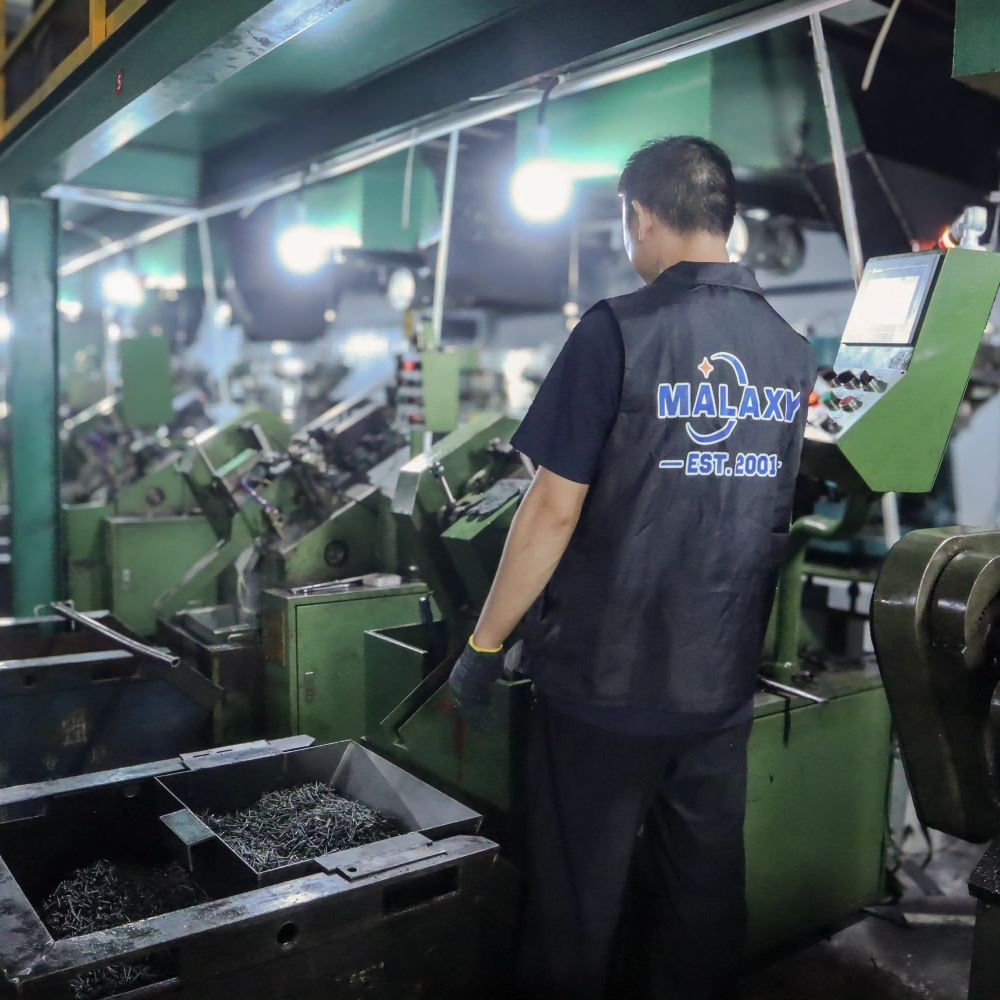
Inside MALAXY’s Fastener Factory in Haiyan, Zhejiang
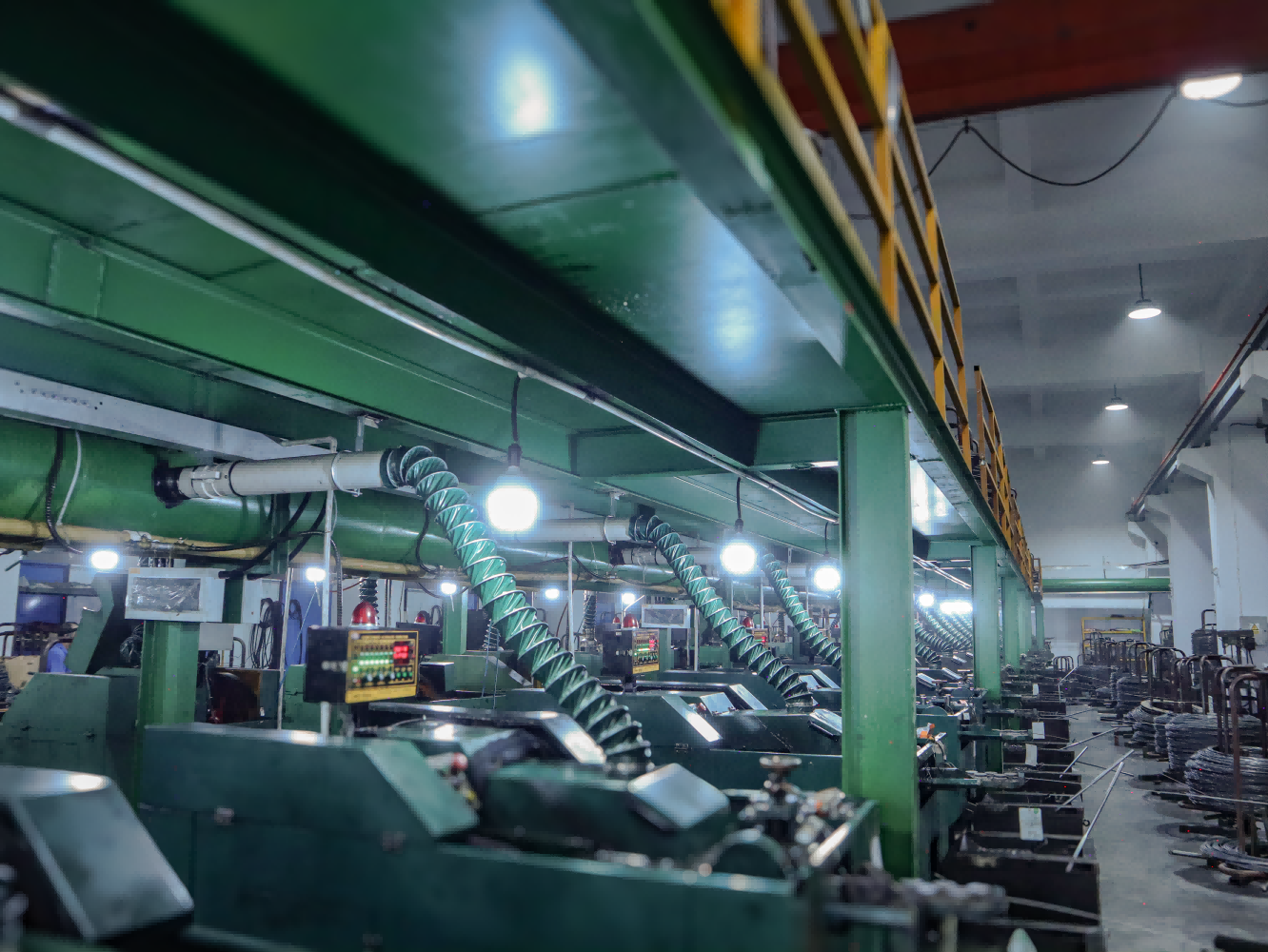
10 Important Factors to Consider When Buying Industrial Fasteners: A Complete Guide for Global Buyers