


Teks Self-Drilling Screws Wood to Metal: How to Choose the Right Screw for Every Job
A TEK (teks) self-drilling screw drills its own pilot hole and cuts its own thread in one pass. That is why a wood-to-metal connection — timber battens, boards or framing fixed to steel purlins, studs and rails — can be finished with one tool and no pre-drilling. Match three things to the job: the drill point to the steel thickness, the thread to the material being pulled down, and the coating to the corrosion class the project or export market requires.
MALAXY has manufactured self-drilling, self-tapping and wood screws since 2001, supplying contractors, wholesalers and building-material distributors across North America, South America and Europe. This guide covers what decides whether a self-drilling screw performs on site — and what to verify before a bulk order.
What Are Teks Self-Drilling Screws?
"Tek screw" and "teks screw" are the trade names for a self-drilling screw: a fastener with a fluted, drill-shaped point that bores its own hole in metal and cuts its own matching thread in the same rotation. A conventional self-tapping screw needs a pre-drilled pilot hole; a self-drilling screw carries the drill on its tip.
Point designations run TEK 1 to TEK 5 according to drill-point length — a longer point drills thicker steel but leaves less thread engaged in thin material. Most construction self-drilling screws follow DIN 7504, which aligns with the ISO 15480 / 15481 / 15482 series; DIN 7504 K is the hexagon head form (ISO 15480).
Why Choose Self-Drilling Screws for Wood to Metal?
One operation, one tool. Drill point and thread sit on the same fastener — no swapping bits, no handing off between drill and driver.
No pilot hole, no misalignment. Battens and boards are fixed in position, often overhead. Removing the pre-drilling step removes the most common source of misplaced fixings.
Lower installed cost. Labour, not the screw, dominates the cost of a fixing. Cutting one operation per fixing is the largest saving available on a high-count roof or facade.
Consistent clamp load. A factory-formed point drills a repeatable hole, so driving torque and joint quality stay consistent across a full run.
Fewer lines on the van. One dual-purpose box covers metal-to-metal and metal-to-wood work.
No More Pre-Drilling: The Drill Point Does Two Jobs
The point cuts through the steel substrate; behind it, the thread engages and forms its own path through the timber or board. Both actions happen in one forward rotation.
TEK 1–TEK 2 — light gauge sheet and light steel framing
TEK 3 — medium gauge steel
TEK 4–TEK 5 — heavy gauge sections, where a longer point establishes the hole before the thread engages
As a working rule, #2 points suit light gauge, #3 medium gauge, and #4 or #5 heavy gauge steel. Because actual capacity depends on steel grade, coating and the manufacturer's forming process, confirm it against the supplier's datasheet rather than assuming a number.
Heads, Washers and Overdrive Control
The point gets the screw in; the head and washer decide whether the joint lasts.
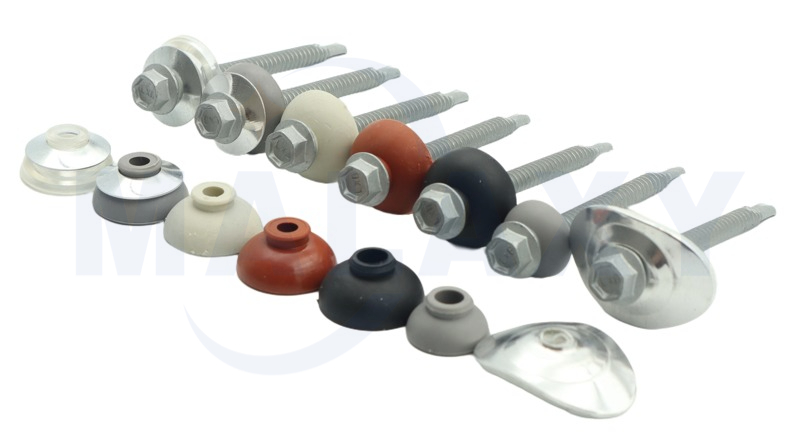
A hex washer flanged head spreads the load on roofing, cladding and batten work and drives with a standard power tool; countersunk and pan forms from the same DIN 7504 series cover flush timber and general assembly. Depth-stop and knurled-shoulder features limit head travel so the substrate is clamped rather than crushed, and knurling behind the thread helps clear swarf as the screw drives. For roof and facade fixings, a bonded EPDM washer with a domed underside is standard: the dome resists wind uplift and the sealing rims close over the hole once seated.
Coatings and Corrosion Classes
Coating / material | Typical environment | Notes |
|---|---|---|
Zinc plated (blue / white) | Indoor, dry-service assembly | Lowest cost, not for exterior exposure |
Mechanically galvanized / heavy zinc | General exterior, sheltered facades | Thicker sacrificial layer than standard plating |
Hot-dip galvanized | Aggressive exterior, industrial atmospheres | Used with hot-dip steelwork |
304 / 316 stainless | Coastal, marine, high-humidity | No sacrificial coating to deplete; 316 for severe chloride |
Bimetal (stainless head + hardened carbon-steel point) | Coastal roofing, facades, solar mounting | Stainless corrosion resistance with a point hard enough to drill steel |
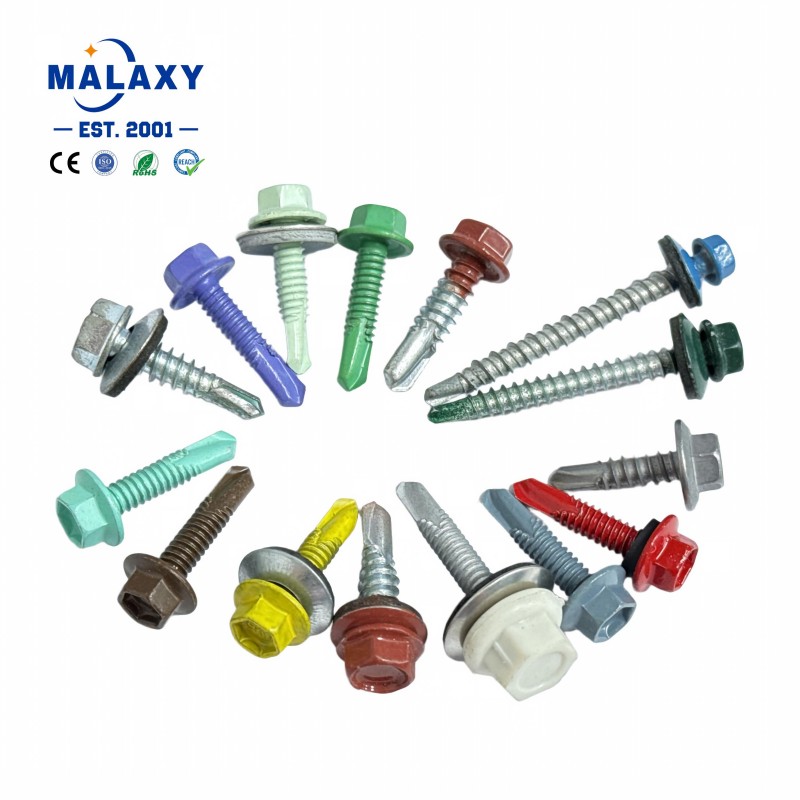
Suppliers are normally asked for CE, RoHS, REACH and ETA documentation alongside ASTM and DIN specifications and mill test certificates.
Self-Tapping vs Self-Drilling vs Wood Screws
Self-tapping screw | Self-drilling (tek) screw | Wood screw | |
|---|---|---|---|
Pilot hole | Required | Not required | Recommended in hardwoods |
Point | Sharp or chamfered | Drill-shaped, fluted | Sharp tapered |
Material | Sheet metal, plastics, composites | Metal to metal, metal to wood | Timber, MDF, chipboard, decking |
Thread | Machine-screw or spaced | Spaced, often finer near the point | Coarse single-lead wood thread |
Typical use | Light-gauge sheet, panels | Roofing, cladding, battens to steel | Furniture, joinery, decking |
Also called | Sheet metal screw | Tek screw, teks screw | Deck screw, chipboard screw |
Self-drilling screws are the only one of the three that removes pre-drilling on the metal side, which is why they dominate battens-to-steel and sheet-to-frame work. Wood screws still win inside timber where appearance matters; self-tapping screws remain the economical choice where a pilot hole is already part of the process.
Specification Reference: Common Self-Drilling Screw Sizes
Using the DIN 7504 K hexagon head self-drilling screw as the reference form:
Diameters: M3.5 – M6.3
Lengths: 13 mm – 70 mm
Corresponding standard: ISO 15480
Head form: Hexagon washer head
Point: TEK 1 – TEK 5 according to steel thickness
In North America the same screws are ordered by gauge — #8, #10, #12 and #14 are common trade sizes — plus point number. The point number, not the length, determines what the screw can drill.
What B2B Buyers Should Verify Before Ordering
Steel thickness range — send minimum and maximum substrate thickness, not just the screw size.
Material being fastened — timber, board, insulation or sheet; this drives thread form and washer choice.
Corrosion class — the exposure category for the final site, not the port of destination.
Head and washer configuration — bonded EPDM or plain washer, washer colour, head marking.
Standards compliance — DIN 7504 / ISO 15480 conformity plus any ASTM specification the buyer's market requires.
Documentation — ISO 9001 certificate, CE / RoHS / REACH / ETA documents, mill test certificates to BS EN 10204.
OEM and packaging — private-label head marking, own-brand cartons, count packs, blister cards or bulk pallets.
Commercial terms — MOQ per size, lead time, batch-consistency testing, and the packaging format for the retail or trade channel.
Frequently Asked Questions
What is the difference between a self-drilling and a self-tapping screw? A self-tapping screw cuts its own thread but needs a pre-drilled pilot hole. A self-drilling screw carries a drill point on its tip, so it bores the hole and cuts the thread in one operation.
What does "TEK 2" or "TEK 5" mean? The number is the length of the drill point. Higher numbers are longer points for thicker steel; lower numbers suit light gauge material.
Can a self-drilling screw go through wood into metal? Yes — that is the wood-to-metal application. The point drills the steel and the thread engages the timber, which is why the same screw fixes battens and boards to steel purlins or studs.
What is the maximum steel thickness a self-drilling screw can handle? It depends on the point number, steel grade and screw hardening. As a working rule, #2 points suit light gauge, #3 medium gauge, #4 or #5 heavy gauge. Confirm capacity from the supplier's datasheet.
Which coating should I choose for a coastal project? Specify 316 stainless or a bimetal screw (stainless head, hardened carbon-steel point). Zinc-plated and standard mechanically galvanized screws are not intended for high-chloride exposure.
Do self-drilling screws need pre-drilling in hardwood? Not for the steel. In dense hardwood near an edge a small pilot hole can still prevent splitting, but no pilot hole is needed to get through the metal.
What is the MOQ for custom self-drilling screws? MOQ is set per size, head form and coating, and is lower when the specification stays within a standard DIN 7504 / ISO 15480 form.
Why Buy Self-Drilling, Self-Tapping and Wood Screws from MALAXY
MALAXY Group was established in 2001 and operates two wholly-owned screw factories alongside a dedicated export subsidiary, keeping production, quality control and export documentation under one roof.
Certified quality systems — ISO 9001:2015, with products compliant to CE, RoHS, REACH and ETA and meeting DIN, ANSI and ISO standards — including compliance with BS EN 10204 and BS EN 14592
Traceability — mill test certificates from raw material through to the finished batch, with SGS- and TÜV-verified processes
Screw-focused production — self-drilling, self-tapping and wood screws are core lines, backed by in-house R&D and an intelligent ERP production system
OEM and packaging — private-label head marking, custom cartons, count packs and palletised bulk supply
Export experience — active supply to North America, South America and Europe, with documentation prepared for the destination market
After-sales support — 24-hour response on technical queries and assembly guidance
Send us the steel thickness, the material being fastened and the corrosion class, and MALAXY will match the point, thread, head and coating and quote from the factory.
Published by MALAXY Group — Shanghai Malaxy Industry Co., Ltd.
Recommended Reading
Screws — self-drilling, self-tapping and wood screw ranges
Washers & Spacers — sealing and flat washers to match the fixing
Anchors — masonry and concrete fixing solutions
All MALAXY products — the full one-stop fastener range
Other Articles
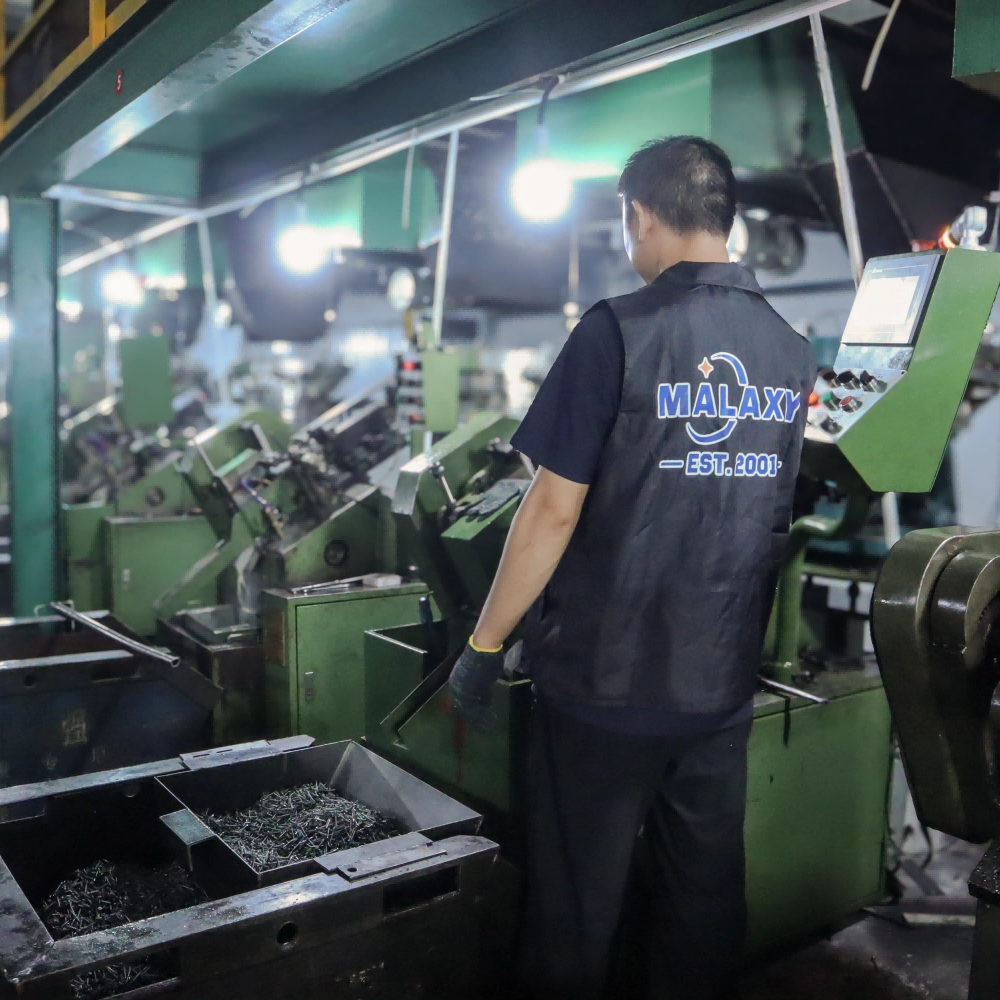
Inside MALAXY’s Fastener Factory in Haiyan, Zhejiang
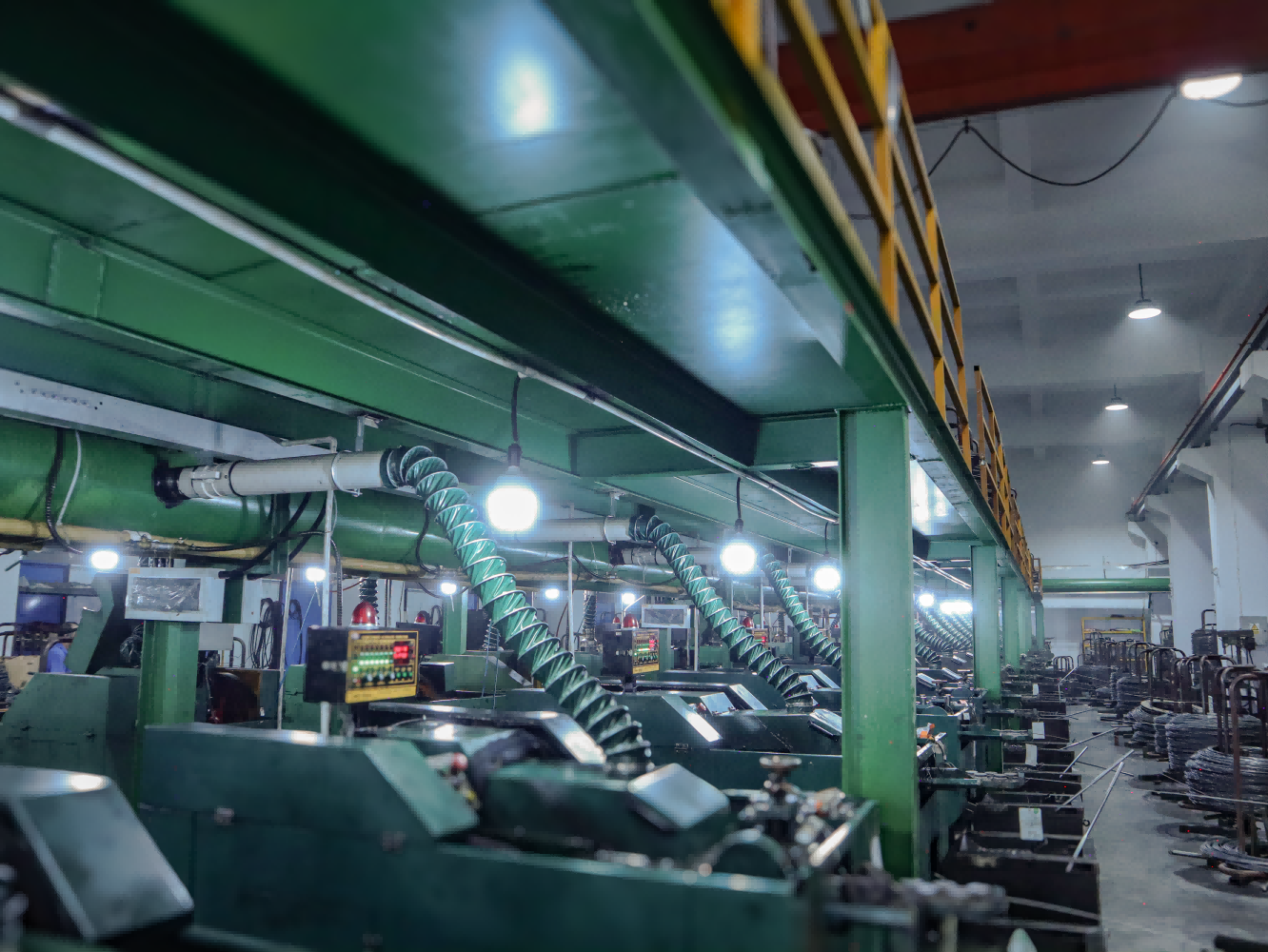
10 Important Factors to Consider When Buying Industrial Fasteners: A Complete Guide for Global Buyers
