


Self-Tapping Screw Sizes & Dimensions: A Practical Guide for B2B Buyers
When sourcing self-tapping screws, choosing the right size is about more than diameter and length. Thread design, head type, material, finish, substrate and installation conditions all affect fastening performance.
For manufacturers, distributors, contractors and industrial buyers, understanding self-tapping screw dimensions can help reduce installation problems, improve consistency and avoid ordering the wrong specification.
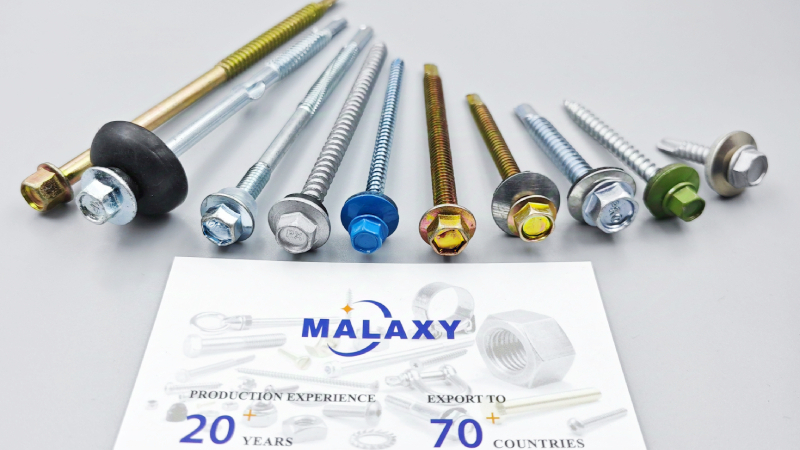
MALAXY, a fastener manufacturer based in Haiyan, Zhejiang, China, provides self-tapping screws for metal, plastic and general industrial applications, with standard and customized specifications available.
What Do Self-Tapping Screw Dimensions Mean?
A typical self-tapping screw specification may be written as:
ST4.2 × 25 mm
Here:
ST4.2 = nominal screw diameter of 4.2 mm
25 mm = nominal screw length
Depending on the product design, buyers may also need to specify thread pitch, head diameter, head height, drive type and point style.
For inch-based products, specifications may instead use a format such as #8 × 1" or #10 × 1-1/2".
This is why a complete specification is more useful than simply asking for “self-tapping screws.”
Common Self-Tapping Screw Sizes
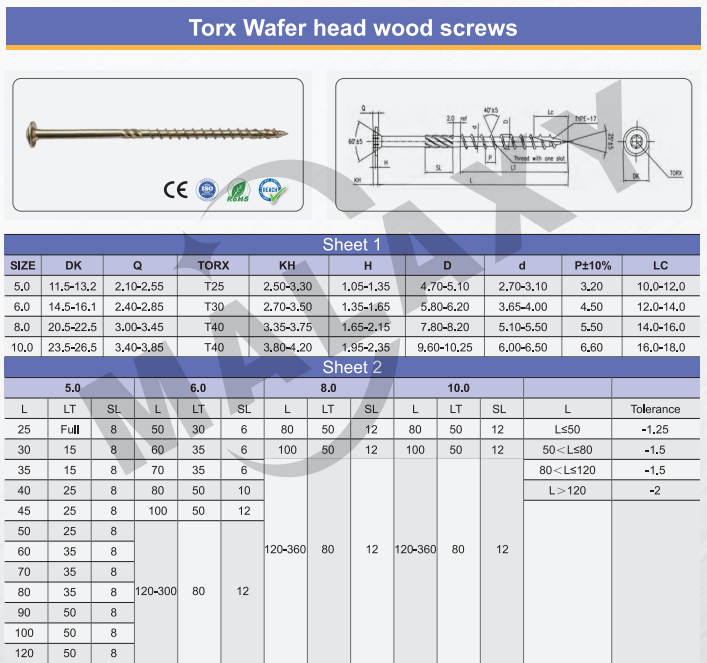
The following sizes are widely seen in industrial and construction fastener sourcing. Exact available lengths depend on the screw type, standard and application. Standardized metric tapping-screw dimensions include sizes such as ST2.9, ST3.5, ST4.2, ST4.8, ST5.5 and ST6.3.
Diameter | Example Lengths | Typical Applications |
|---|---|---|
ST2.9 | 9.5–25 mm | Light sheet metal, small components |
ST3.5 | 13–32 mm | Electrical equipment, thin metal |
ST4.2 | 13–50 mm | Sheet metal, HVAC, general assembly |
ST4.8 | 16–50 mm | Metal panels, equipment assembly |
ST5.5 | 20–65 mm | Heavier sheet and industrial applications |
ST6.3 | 25–75 mm | Larger assemblies and heavier-duty fastening |
A self-tapping screw size chart is useful for initial selection, but the final specification should always be matched to the actual substrate and product standard.
How to Choose the Correct Screw Length
Length should provide enough engagement without creating unnecessary protrusion.
Consider:
Material thickness + component thickness + required thread engagement = suitable screw length
For example, a short screw may be suitable for thin sheet metal, while a longer screw may be needed when fastening through brackets, insulation layers or multiple components.
Too little engagement can reduce holding performance. Excessive length can increase material cost or interfere with components behind the joint.
For production buyers, it is better to specify the complete assembly thickness rather than selecting length by appearance alone.
Diameter and Thread Both Matter
Diameter influences the amount of material engaged by the thread and the overall fastening capacity.
For common self tapping screws for metal, ST3.5–ST6.3 sizes are frequently encountered, but the appropriate diameter depends on sheet thickness, material hardness and required holding performance.
Thread geometry is equally important. Thread-cutting and thread-forming designs behave differently in metal, plastic and other substrates. Pilot-hole requirements can also vary with the screw design.
ISO 1478 provides specifications for tapping screw threads and thread ends, while different DIN standards cover specific tapping-screw head and drive configurations.
Self-Tapping vs. Self-Drilling Screws
These two products are often mixed together in purchasing searches.
A self-tapping screw is designed to create or form the mating thread in the substrate. Depending on its design and application, a pilot hole may be required.
A self-drilling screw incorporates a drill-point tip, allowing it to create the hole and form the thread during installation.
Feature | Self-Tapping Screw | Self-Drilling Screw |
|---|---|---|
Creates mating thread | Yes | Yes |
Drill point | Not necessarily | Yes |
Pilot hole | Often required | Usually not |
Common applications | Sheet metal, plastic, assemblies | Metal-to-metal, roofing, steel framing |
Selecting between the two should be based on substrate thickness, installation process and required drilling capability.

Head Type, Drive and Finish
Dimensions do not stop at the screw body.
Common head options include:
Phillips Pan Head – widely used for general sheet-metal and industrial assembly.
Countersunk Head – designed for applications where the head should sit flush with the material surface.
Hex Washer Head – provides a larger bearing area and is widely used for construction and panel fastening.
Drive styles may include Phillips, Pozidriv and Torx, depending on the product specification.
Material and surface treatment should also match the working environment. Common options include carbon steel, stainless steel 304/316/410, zinc plating and other protective finishes.
What Should B2B Buyers Specify?
A clear RFQ can significantly reduce specification errors.
For custom self-tapping screws or repeat-production orders, MALAXY recommends providing:
Diameter + Length + Thread + Head Type + Drive + Material + Grade + Finish + Standard + Application
For example:
Phillips Pan Head Self-Tapping Screw, ST4.2 × 25 mm, Carbon Steel, Zinc Plated, DIN Standard, for Sheet Metal Assembly
For OEM projects, buyers can also specify packaging, labels, logo, quantity per package and other private-label requirements.
MALAXY Manufacturing Perspective
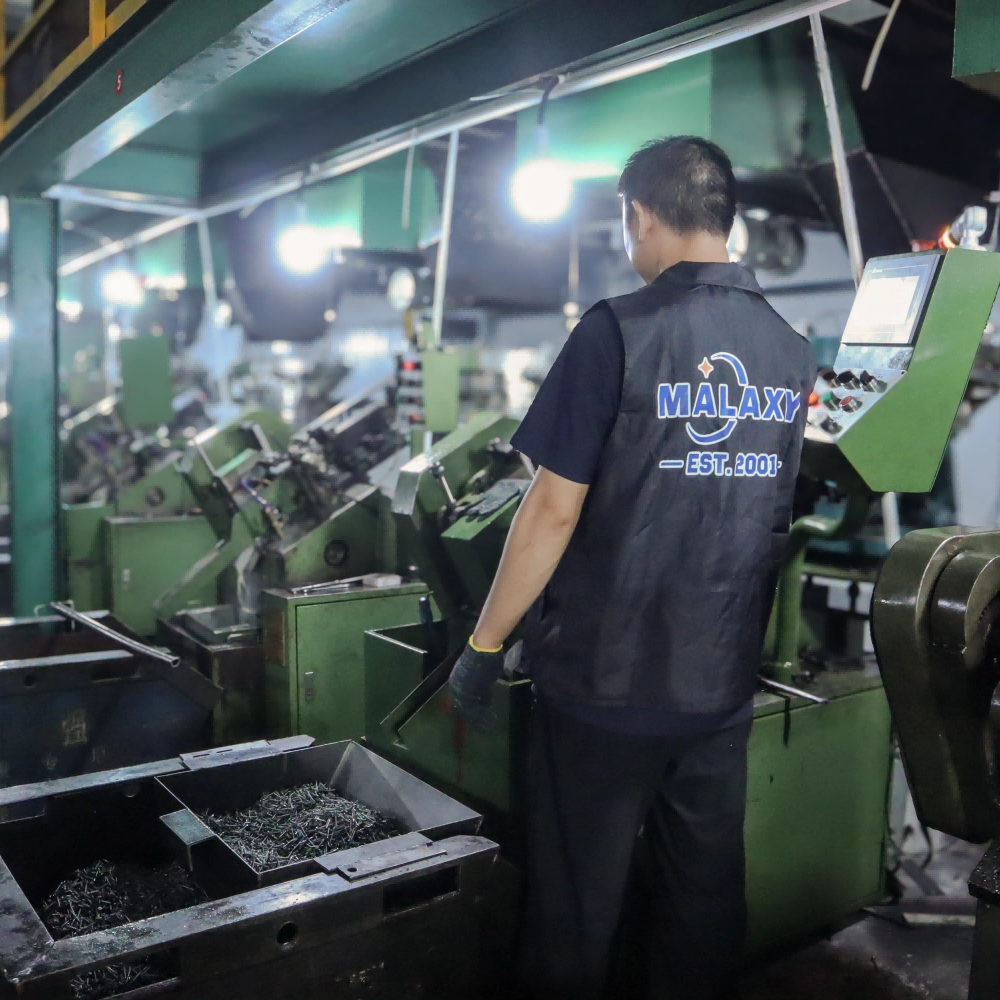
As a fastener manufacturer with more than 20 years of production experience, MALAXY focuses on dimensional consistency, thread accuracy, material selection, surface treatment and production quality for B2B fastener orders.
MALAXY's self-tapping screw range covers different materials, head styles, drive types and customized specifications for industrial and construction applications. The company also provides custom packaging and OEM solutions for overseas buyers.
For buyers sourcing self-tapping screws in volume, the most important question is not simply “What size screw do I need?”
It is:
“Which combination of size, thread, material and design is correct for my application?”
FAQ
What are the common self-tapping screw sizes?
Common metric sizes include ST2.9, ST3.5, ST4.2, ST4.8, ST5.5 and ST6.3, with multiple length options depending on the application and standard.
Can self-tapping screws be used for metal?
Yes. They are widely used for sheet metal and metal assemblies, provided the thread design, diameter and installation method match the material.
What is the difference between a self-tapping screw and a self-drilling screw?
Self-tapping screws form or cut the mating thread, while self-drilling screws also use a drill-point tip to create the hole during installation.
Are stainless steel self-tapping screws available?
Yes. Stainless steel 304 and 316 are common options, with the appropriate grade selected according to the service environment.
Can self-tapping screws be customized?
Yes. Diameter, length, head type, drive, material, finish and packaging can be customized for OEM and bulk B2B requirements.
Conclusion
The correct self-tapping screw dimensions depend on more than length and diameter. Thread design, substrate, head style, material, coating and installation conditions all need to work together.
For wholesalers, distributors, contractors and manufacturers, defining the complete specification before ordering helps improve compatibility, installation efficiency and repeat-order consistency.
MALAXY supplies self-tapping screws and other industrial fasteners for global B2B buyers, with standard and customized solutions available.
Other Articles
Inside MALAXY’s Fastener Factory in Haiyan, Zhejiang
10 Important Factors to Consider When Buying Industrial Fasteners: A Complete Guide for Global Buyers
